Giorgio Armani, the Italian designer who founded and led his fashion house for five decades, died on September 4, 2025 at his home in Milan, aged 91, per Reuters and confirmation from the company. His death came months after he had missed the house's June 2025 Milan show marking its fiftieth anniversary, per Fortune's obituary coverage, making the farewell season a documented passage rather than a sudden rupture.
What did Armani actually change?
The soft-shouldered suit for women, first, and then the idea that a designer could run a total lifestyle company. From the 1980s power suit — the deconstructed jacket that dressed a generation of working women — through Armani Jeans, Emporio Armani, hotels, cosmetics and interiors, he built one of the few remaining large, independent, founder-owned luxury groups. Forbes estimated his fortune at 12.1 billion dollars, per its coverage of the estate, a figure that measures how far a single tailoring idea can be extended.
How is the house structured after his death?
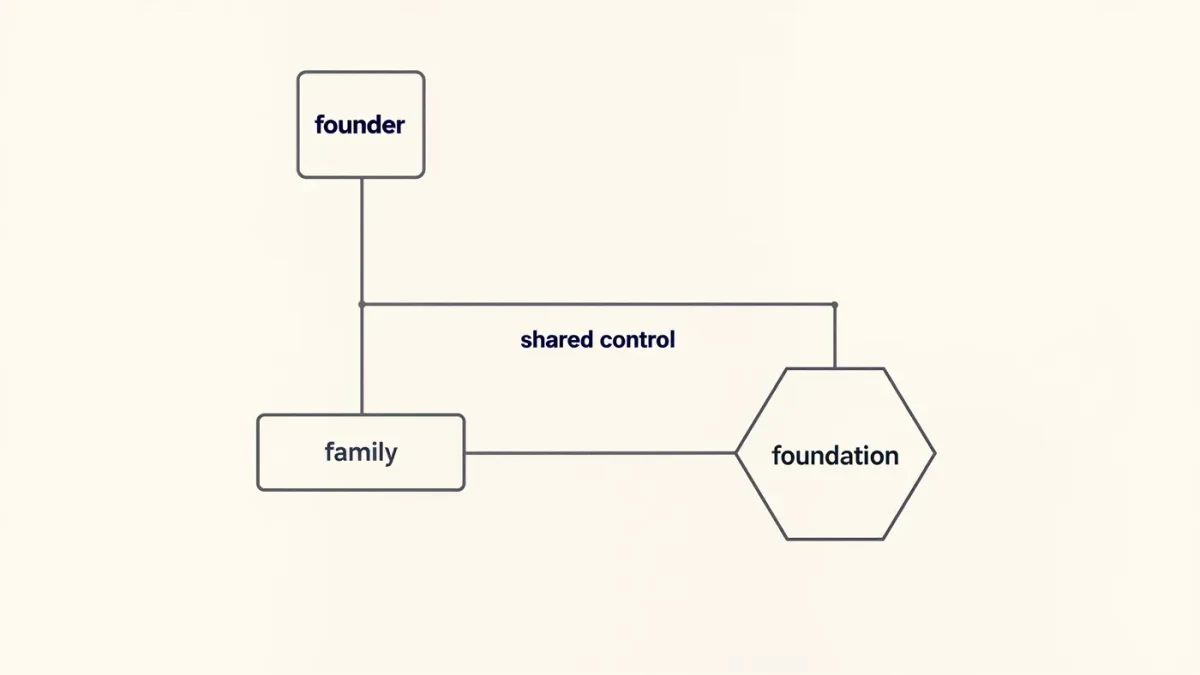
The succession was designed by Armani himself and documented in his will, unsealed a week after his death, per Forbes: control of the company passes to family members working alongside the Giorgio Armani Foundation, a structure explicitly intended to keep the group independent and out of outside hands. That makes Armani the counter-case to the 2025 creative-director carousel — the question is not who designs next, but whether a founderless ownership architecture can hold a house whose discipline was personal.
The anniversary context
The fiftieth-anniversary season gave the transition its frame: a retrospective exhibition celebrating fifty years of the house was staged in Milan in September 2025, per press coverage of the anniversary program, turning the milestone into both a celebration and an inheritance reading.
Why does this matter to fashion's map?
Because the industry spent 2025 debating who should sit in chairs left empty by retirement, while Armani's death posed the harder version of the question: a house with no creative-director vacancy at all, but an unrepeatable author. Whether the foundation model preserves the soft tailoring, the grey-beige palette and the restraint that defined the house will be the decade's Italian case study — and the first collections designed without him are the record to watch.
The final public record carried the transition's tone. Per Fortune, Armani died peacefully surrounded by his family, weeks after a fiftieth-anniversary season his health had kept him from attending in person; per People, the obituaries centered on the 1980s power suit that dressed a generation of working women. The will's unsealing a week later confirmed what the house had long signaled: no sale, no outside investor, the foundation as the guarantor of independence. For the readers tracking the industry's 2025 reset, it is the one house on the map where the next chapter will not be written by a newly appointed designer at all — and where every collection now functions as the founder's posthumous argument, made by hands he trained.