Designers is the profile archive of AWH Magazine: reported pieces made from studio visits, interviews and the collaborators who work alongside a designer. Subjects range from first collections to houses changing hands. Useful for readers who want to know how a garment was arrived at, not only who signed it.
Reported profiles of designers at every stage, from graduate collections to houses under new direction, built out of studio time rather than press notes.
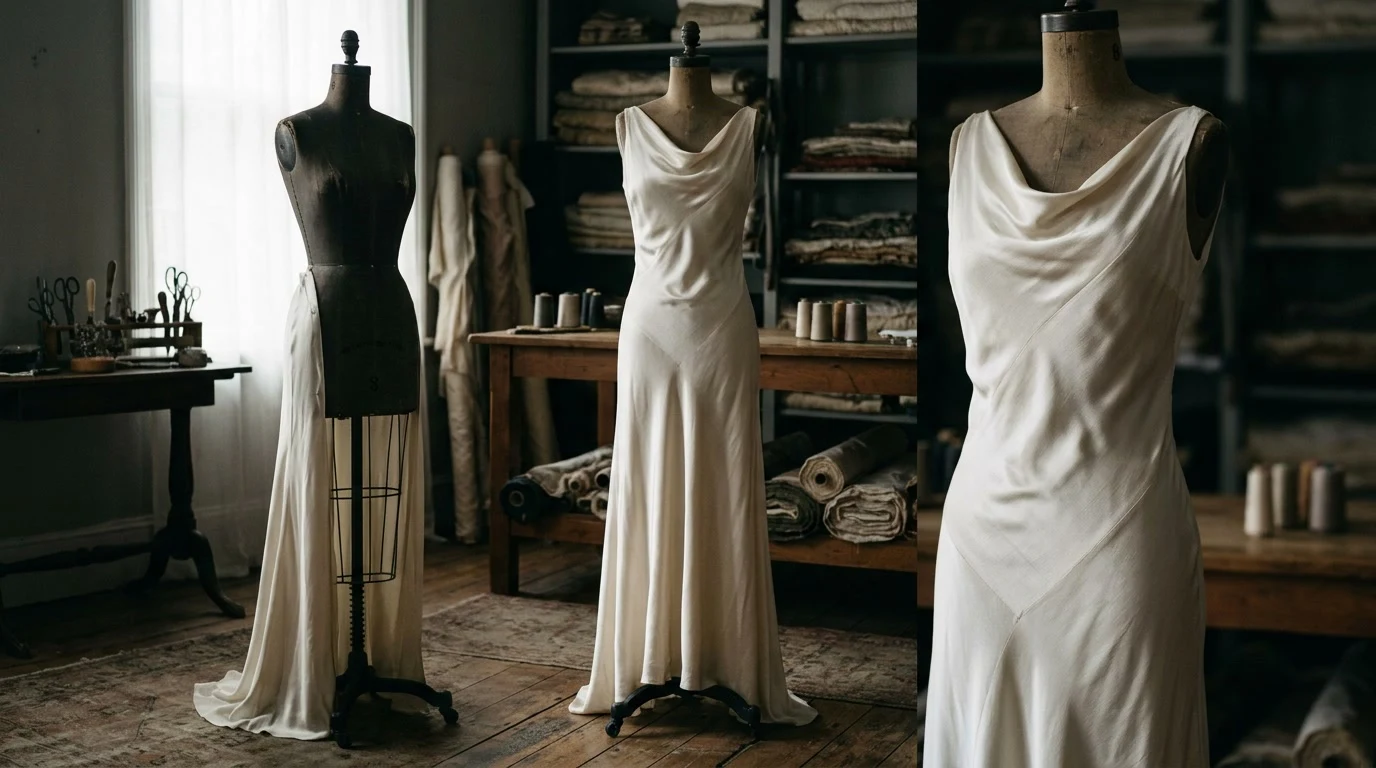
Working in Paris from 1912 to 1940, Vionnet built her house on one technical argument — cloth cut across its grain drapes instead of hangs — and then, a decade into her fame, quietly cut against her own signature.
The Dublin-born designer has spent a decade and a half turning Irish references, pearls and tulle into an archive-obsessed wardrobe, tested at scale by her 2021 guest collection for Jil Sander.
The Liberian-American designer built a unisex label around a vegan-leather shopping bag priced within reach, winning the CFDA's American accessory award in 2021 and rewriting who a designer object is for.
From a Central Saint Martins graduate collection to the LVMH Prize in 2016 and a Dior menswear appointment announced in 2025, Wales Bonner has argued that Black Atlantic history can be a design method.
When the Costume Institute's Savage Beauty drew record crowds in 2011 and again at the V&A in 2015, the argument over whether McQueen's catwalk theatre was fashion or performance closed in his favour.
The Roman-born designer built a Paris house of nearly two thousand workers on shock pink, novelty and disciplined organisation — and ran it, from 1935 to 1954, like the company it was.
The Tunisian-born couturier built body-moulding clothes from knit and leather on his own schedule, ran his house from a rue de Moussy atelier, and showed only when the work was finished.
The Austrian-born American designer made his name with the 1964 monokini and his argument with unisex, knit and futurism — a body of provocation that turned out to be a working forecast.
A Chelsea boutique opened in 1955 turned youth clothing into an industry, and the Victoria and Albert Museum's 2019 retrospective credited Mary Quant with designing the sixties as most people actually wore it.
The Anglo-American couturier treated the evening gown as a structural problem in weight, spiral and support, an obsession the Metropolitan Museum of Art staged as Beyond Fashion in 2014.