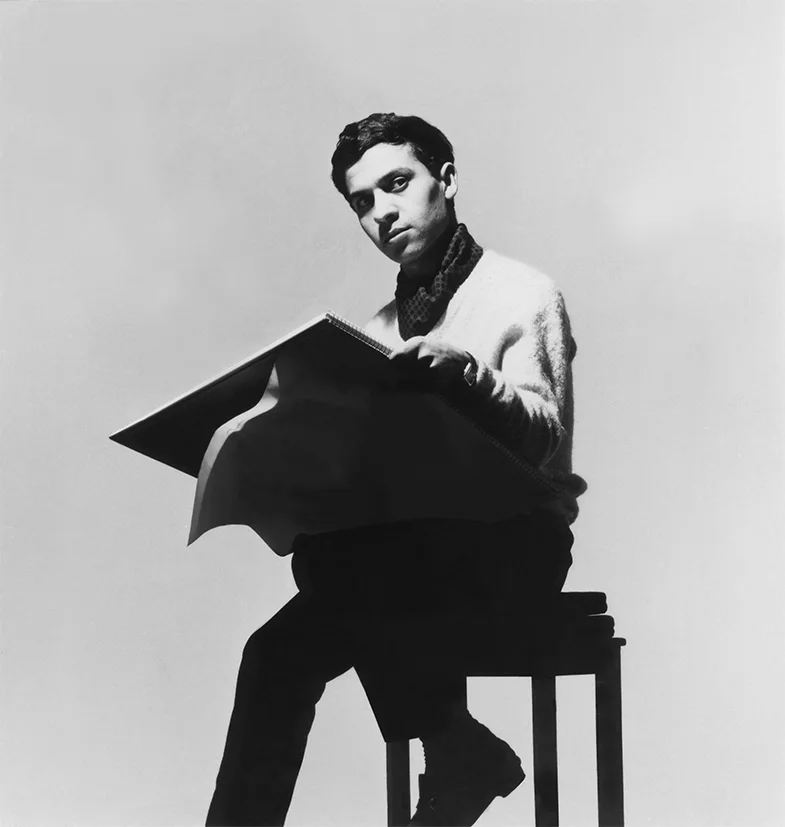
Azzedine Alaïa made the most technically severe clothes of the late twentieth century — stretch-knit and leather constructions that moulded the body like engineering — and defended them with the least compromising production model in fashion: he showed when he was ready, in his own building at 18 rue de la Moussy in Paris, on a calendar the industry did not set. The nickname — the king of cling — was press shorthand; the substance, as the Palais Galliera's 2013 Paris retrospective and the Design Museum's 2018 London exhibition documented, was a couture practice hidden inside ready-to-wear, run by one man who had trained as a cutter and never stopped cutting. He died in November 2017, days after opening his final exhibition, and the house has kept his structure since.
How did Azzedine Alaïa learn to cut?
In Tunis, at night, and then in the Paris ateliers of Dior, Guy Laroche and Thierry Mugler. Born in 1935 in Tunis to a farming family, Alaïa studied at the École des Beaux-Arts in Tunis, where his course, per the retrospective literature, trained him in couture techniques — and where a neighbour's supply of couture clients gave him private fittings work. He moved to Paris in 1957, worked through the Dior ateliers during the transitional seasons after the founder's death and then for Laroche and later Mugler while dressing private clients — Greta Garbo among the early ones, per the house's accounts — from a borrowed room. By 1980 he had his own label; by 1984 the first of the industry prizes (the French fashion Oscar for designer of the year) confirmed what the private fittings already knew: this was construction, not styling.
What made the clothes 'cling'?
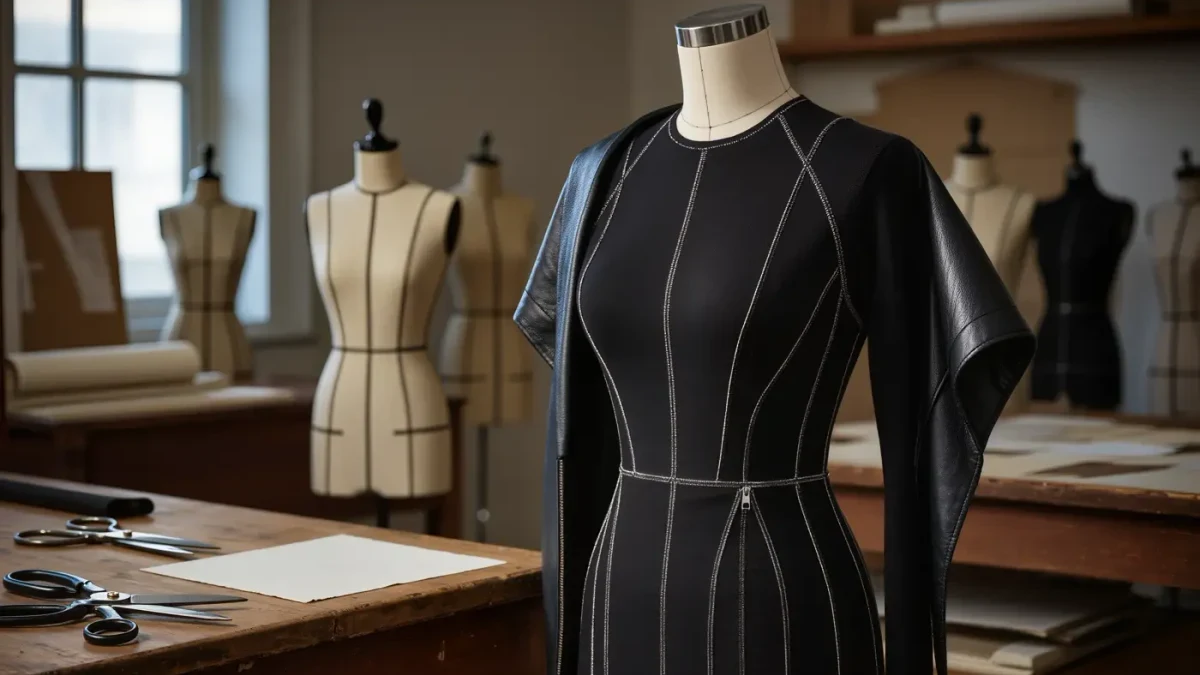
The term undersells the engineering. Alaïa's signature was the body-skimming second-skin dress cut from stretch wool knits, bandage-like panels and zipped leather, its shaping achieved through cut, bonding and seaming rather than through boning or shapewear underneath — garments that, as conservators at the Galliera showed, behave like compression structures, distributing the body's volume across dozens of precisely placed seams. The technique translated couture logic into knitted cloth: he preferred to work in his atelier on live models, cutting directly, draping the toiles himself, in the tailor's manner that the couture system had largely abandoned. The famous clients — from the 1980s supermodels who walked for him unpaid, per the house's records, to the collectors who kept their Alaïas for decades — were evidence of fit; the museum evidence, assembled in 2013 and 2018, is of method. Criticism existed and belongs in the record: the clothes demanded the body they were cut for, and the 1990s fashion press occasionally charged the second-skin ideal with a narrow physical standard. Alaïa's reply, on the record across interviews, was that he cut for women he knew, individually.
The house that showed off-calendar
The independence was structural, not rhetorical. Alaïa refused to sell his name, kept ownership tightly held, and by the late 1980s had bought and renovated the rue de la Moussy building in the Marais — atelier, salon, kitchen and, later, gallery under one roof; he became as known for the nightly dinners he cooked there for models, clients and friends as for the collections. He simply stopped following the ready-to-wear calendar: shows happened when collections were ready, sometimes seasons late, sometimes not at all for the press, and the house left the official schedule long before the industry began debating the show system's exhaustion in the 2010s. In 2000 the Prada Group took a minority stake (later held by the Compagnie Financière Richemont structure), an arrangement that preserved the label's autonomy, per the companies' announcements at the time. The 2017 Foundation Azzedine Alaïa opened in the Marais building with an exhibition of his work in July of that year; he died on 4 November 2017, with the museum's Alaïa exhibition running — his own curated survey.
What is Alaïa's legacy?
Two models at once: a cutting technique and a governance model, each proven by the other. Designers who build shaping clothes from stretch, seaming and leather are working in his method; houses that withdraw from the show calendar to protect their production rhythm are working in his precedent, with his own career as the documented case that independence can outlast the designer. The house continued under the Foundation's umbrella, with his archived toiles and the rue de la Moussy ateliers kept as working premises — the argument, in cloth and in brick, that the couture discipline Alaïa learned in Tunis and practised in Paris was never the industry's calendar, but the cut itself.
How did the atelier actually work?
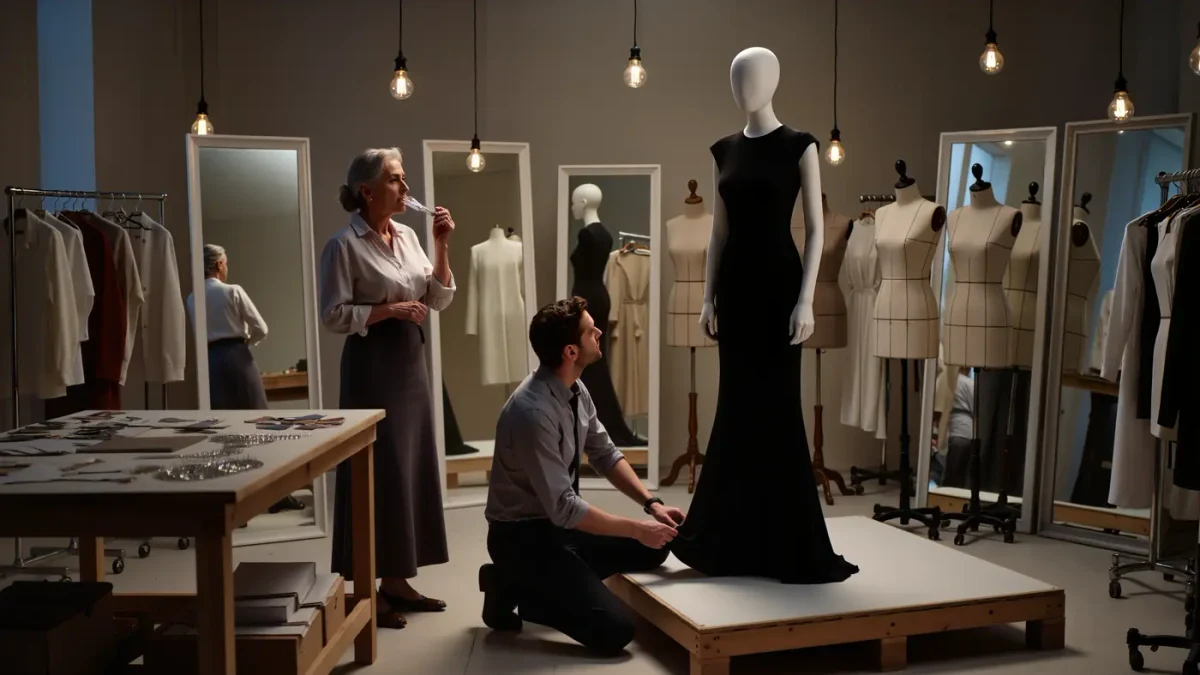
The rue de la Moussy building functioned as both factory and salon, and the routine was famous in the industry. Alaïa worked at night, cutting on live models who stood for hours while he pinned, sliced and rebasted the stretch cloth directly; toiles were corrected on the body rather than on the stand; and the in-house kitchen fed whoever was there, so that fittings, dinners and business merged into one continuous working day — accounts by the models and assistants who lived through it describe sessions ending near dawn. The system kept decision-making entirely in the founder's hands, which was precisely its point: no calendar, no board, no licensing committee between the cutter and the cut. The Foundation's preservation of the ateliers as working premises means the method, not only the garments, survives as documentation — a rarity in fashion's museum record.
The reception history completes the picture. The 1980s made him the cult designer of models and editors; the 1990s, after he withdrew from the schedule, turned him into a legend of absence — clothes spoken of because they were rarely shown; and the 2010s brought the institutional consolidation, with the Galliera retrospective in 2013, the Design Museum show in 2018 and the Foundation's opening in 2017 fixing the archive in place. Through all three phases his client base, per the house's accounts, barely moved: women who had been fitted in the 1980s ordered in the 2010s, because the fit was personal and the cutter remembered. Continuity of that kind is rare enough in fashion to count as an argument.