A dress begins long before the show. It begins as a line on paper, becomes a length of cloth on a stand, and passes through more hands than its label will ever name. The runway moment lasts minutes; the making of the garment takes months of drawing, cutting, stitching, and undoing.
This piece follows one garment — a dress, imagined but typical — through the stages a collection passes through. The sequence varies by house and by scale, and no two ateliers work identically. But the shape of the journey is durable: research, sketch, fabric, toile, pattern, sample, fitting, and only then, the show.
Understanding how fashion collections are made changes how the clothes read. A seam stops being decoration and starts being a decision. And a schedule slips, as schedules do — the phrase behind schedule is common enough that Cambridge dictionary defines it in its business section as completing work later than planned, a condition nearly every collection has known at least once.
Where does a collection actually begin?
Not with a sketch, usually. It begins with research: a designer gathering images, fabrics, archives, books, and references into what the trade calls a mood or inspiration board. Some designers start from a fabric, holding a swatch until an idea forms around it. Others start from a silhouette — a shoulder, a hem, a way a coat might close.
Designers designers work this way across scales, from graduate collections to global houses. The research phase can run weeks or months, and it is deliberately wasteful: most of what is gathered never reaches the runway. Its job is to sharpen the eye before the first drawing is made.
What happens between the sketch and the first cloth?
When sketches are chosen, the atelier translates them into three dimensions. The first version is rarely cut in real fabric. It is made in muslin or toile — plain, inexpensive cotton — so the pattern cutter can test proportion without risking costly material. This test garment is called a toile, and a single look may go through several before anyone touches the final cloth.
Two methods of shaping compete here, and most houses use both. Flat pattern cutting works on paper, drafting the garment as pieces to be sewn together. Draping works on the stand: cloth is pinned directly onto a dress form and cut in place. The difference matters. Madeleine Vionnet built her whole reputation on the second method, cutting cloth on the bias — the diagonal of the fabric, so it falls rather than hangs — as our profile of The Grain of the Cloth: How Madeleine Vionnet Cut the Dress Free of the Corset describes. A drape can suggest things a drawing never could.
What does the fabric stage involve?
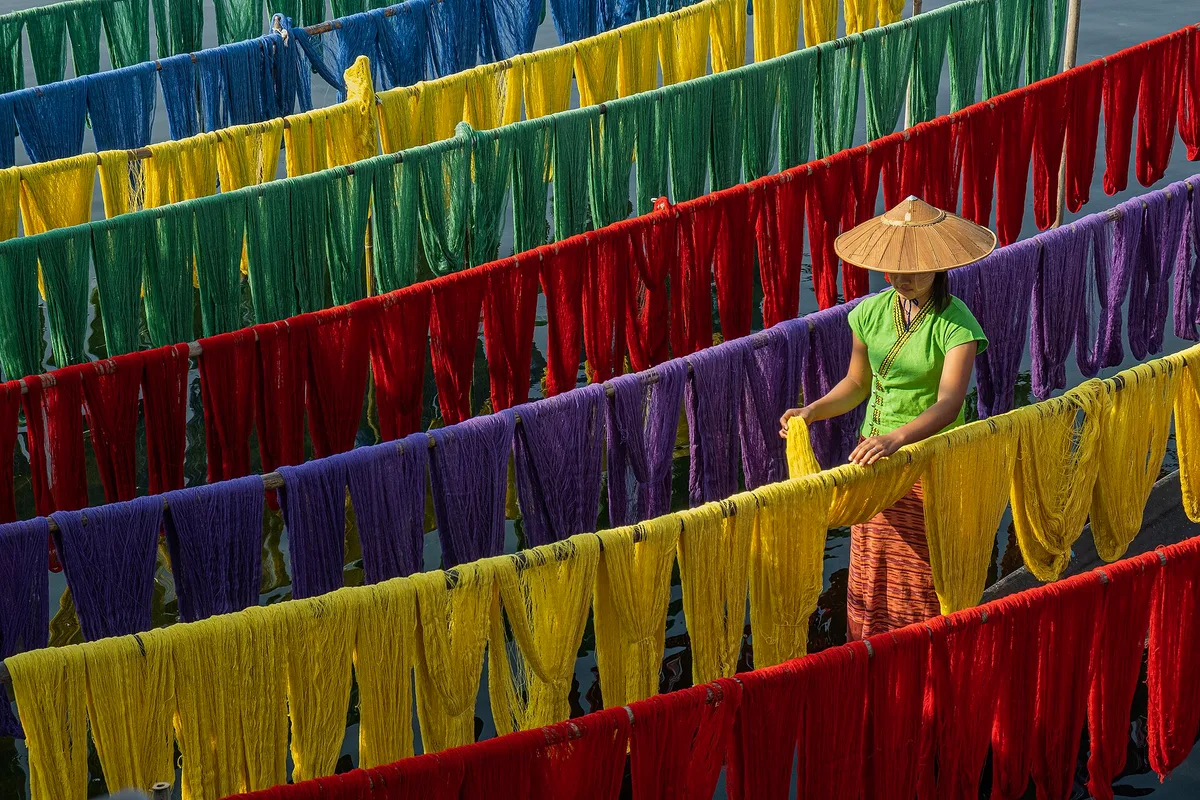
Fabric is chosen early but often arrives late. Houses work with mills and suppliers seasons ahead, ordering swatches, then lengths. Colour has to be matched; prints have to be engineered so a motif lands where the designer wants it on the body. Delays here are the classic reason a collection runs late.
The cloth also dictates what is possible. A fluid silk will not hold an architectural shoulder; a stiff duchess satin will not whisper. Charles James understood this to the point of obsession, engineering his ball gowns with the internal structure of a building, as Engineering the Twirl: Charles James and the Ball Gown Built Like a Building recounts. Fabric selection is not shopping. It is engineering. This connects to our earlier piece, Engineering the Twirl: Charles James and the Ball Gown Built Like a Building.
How many fittings does one garment get?
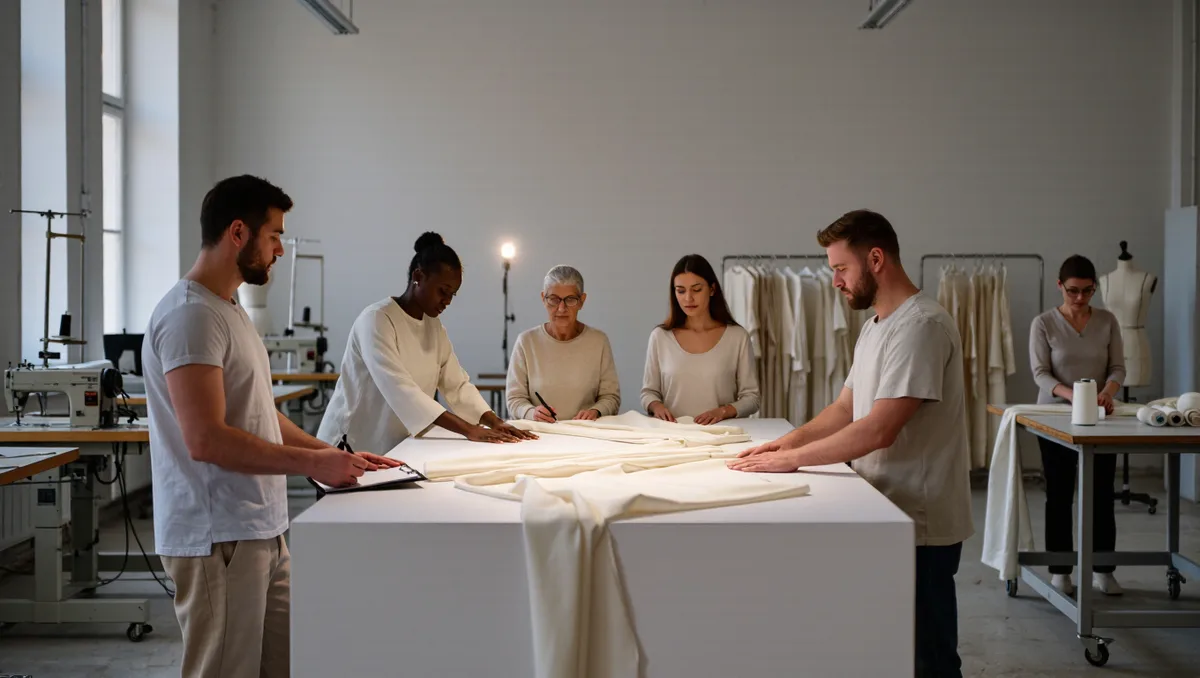
More than most readers would guess. The sample is made in a standard size, then fitted on a live model or a fit model — a person hired not to walk shows but to be the body the clothes are built around. The designer studies the garment in motion: does the armhole bind, does the hem swing, does the waist sit where the sketch promised?
Then the garment is taken apart and corrected. Pins, chalk marks, and pinned hems come back to the sewing table as notes. Azzedine Alaïa, who famously kept his own calendar and showed when the clothes were ready rather than when the schedule said so, built his exacting reputation on this stage of the process — the cut that holds, as our essay on Azzedine Alaïa, King of Cling, and the Calendar He Refused to Keep puts it. Fittings are where a collection is actually won. Readers following this should also see The Cut That Holds: Azzedine Alaïa, King of Cling, and the Calendar He Refused to Keep.
What happens in the final weeks before the show?
The last stretch is compression. Casting selects the models; styling decides which pieces appear together and in what order; music, lighting, and set are locked. Embroidery, beading, and any handwork arrive last and often finish days before the show. Backstage, each look is assembled on a rail with a card listing every piece, right down to shoes and jewellery, so a dresser can build the look in minutes.
Our analysis: the runway is best understood as the visible tip of a production system, not its celebration. The show compresses months of decisions into a sequence of looks, and the order itself is an argument — the collection read at walking pace.
What this means for anyone reading a collection: judge the garment, not the spectacle. The seam, the shoulder, the way a hem breaks — those are the decisions that survived months of testing. Everything else was scaffolding.
What happens after the runway?
The show is not the end; it is a sales event. Buyers from stores place orders, and production then scales the samples into sellable sizes. Lead times mean the clothes a critic reviews in one season often reach shops two seasons later. The gap between runway and retail is one of the quiet facts of the industry, and it shapes everything from trends to markdowns.
Some garments never go into production at all. They exist as press samples or as the house's proof of skill — the pieces that establish an idea, even if the sellable version is simpler. In that sense the runway dress is both product and manifesto, and the months behind it are the part of the story the photograph never shows.