Cristóbal Balenciaga was the couturier other couturiers studied, a Spaniard trained in the tailor shops of Madrid and San Sebastián who opened his Paris house at 10 Avenue George V in 1937 and spent three decades proving that a dress could be constructed rather than draped into flattery. When he closed the house in 1968, weeks before the student riots reached the boulevards, the closure read less as retirement than as a verdict: the couture he practised — exact, architectural, indifferent to advertising — had no successor he cared to train. His clients included the longtime collector society figures who ordered without fittings previews; his admirers, per Christian Dior, made him "the master of us all."
Where did Balenciaga learn to cut?
He learned in Spain, and the answer matters because French couture had long assumed the opposite direction of apprenticeship. Born in 1895 in Getaria, a fishing village in the Basque province of Guipúzcoa, Balenciaga apprenticed as a tailor in San Sebastián and later ran branches of the Madrid house Eisa, which dressed the court circle before the Spanish Civil War scattered it. Spain supplied both his technique and his archive of references: the short brisk jackets of bullfighters, the black lacquered volumes of priestly vestments, the infanta portraits of Velázquez that he turned into short full-sleeved evening dresses in his 1939 Infanta silhouettes. When Paris met his work in 1937, it was meeting a fully formed regional school — a Spanish cut, taught in Spanish workshops — that now answered to a French address.
What made his construction different?
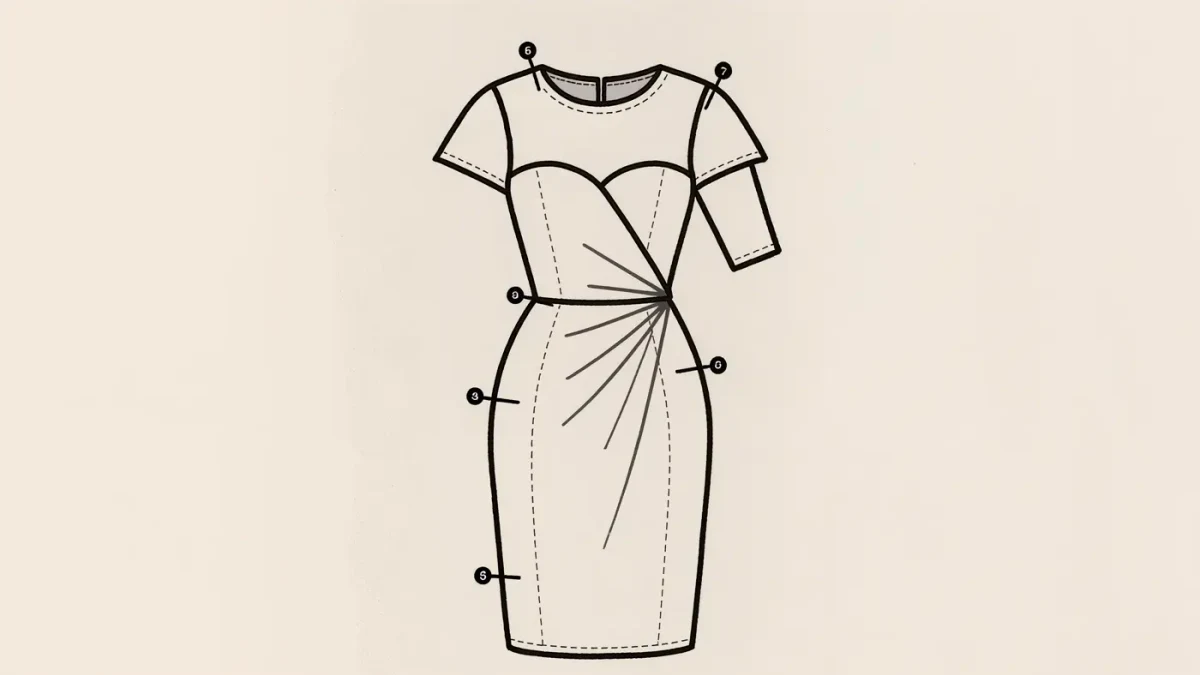
The difference was that the dress stood on its own architecture before a body arrived. Balenciaga cut away from the waist decade after decade: in 1947, as Dior's cinched New Look filled the pages, he was already loosening the jacket into the softly rounded silhouette of that year; in the 1950s he produced the tunic dress of 1955 and the sack dress of 1957, shapes that abolished the waistline altogether; in 1958 came the baby doll, in 1959 the empire line and the high-waisted shift that the press grouped as the Empire revival; and in 1967 he reduced the bride's dress to a single gazar spiral, the stiff silk gazar — a crisp woven fabric he developed with the millman Bernat — holding its own volume without a corset underneath. Cecil Beaton, who photographed his work and anthologised it, argued in The Best of Beauty that these clothes changed the line of the century. The point was not comfort, though wearers testified to it; the point was that volume, not the waist, became the load-bearing element of the modern dress.
The tailor's logic
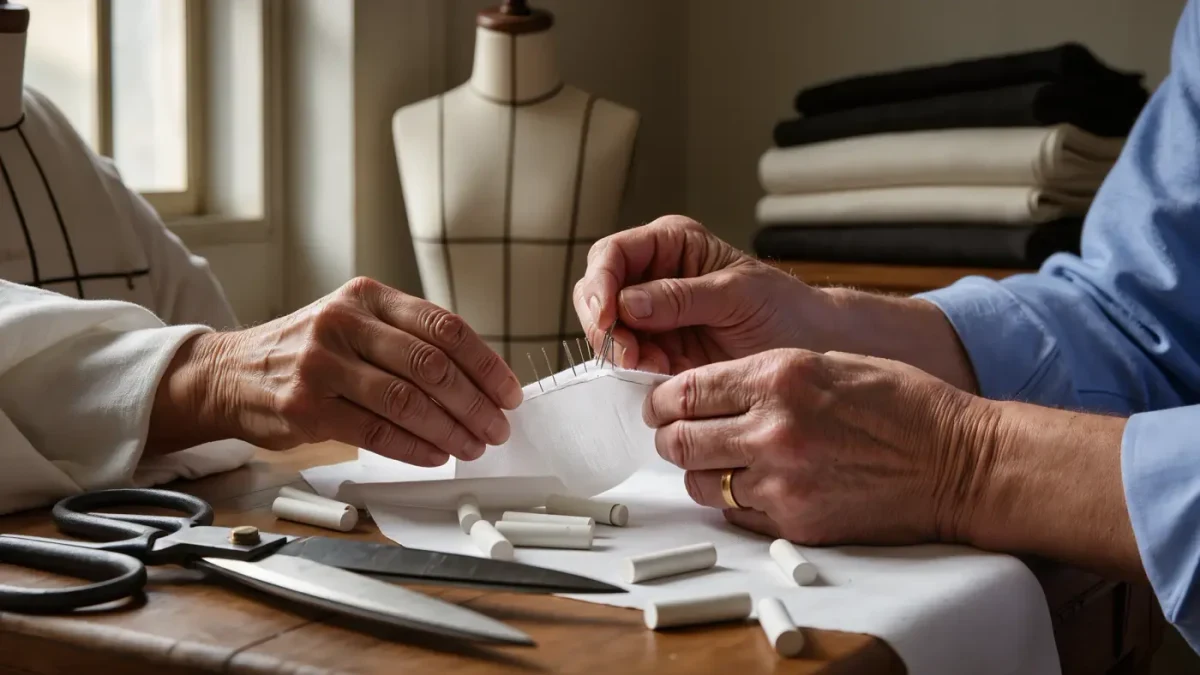
Colleagues described a studio run like an atelier of tailors rather than a salon of fantasies. Hubert de Givenchy, who trained under him, recalled watching a first muslin toile pinned, cut and corrected by Balenciaga's own hands; the seamstress and writer Maggie Tabberer's generation of fittings testimony agrees that he worked standing, cutting directly on the model or the muslin, a method closer to bespoke tailoring than to sketch-led couture. He showed at the eleventh of the month, one collection a season, with no music and no theatrical staging — a schedule so austere that the trade press complained, and so exact that the same press printed the collections line by line. Criticism was part of the record: American buyers of the late 1950s repeatedly reported that the sack and shift sold slowly at first, and the house's insistence on the new line before the client understood it was, by every account, a commercial cost he accepted rather than a marketing virtue he claimed.
Why did he close the house in 1968?
He closed it because the conditions of his craft were being dismantled, and he said as much. In interviews given at the time, Balenciaga pointed to the rising cost of couture production and to a fashion system that was moving toward ready-to-wear, licensing and publicity — structures in which a house designed a name rather than a dress. The announcement came in May 1968; the final collection, shown that July, was one of his quietest, and the ateliers shut within weeks. He had already told close associates, per the biographies of Mary Blume and the memoir testimony of his workroom directors, that he would not preside over the dilution of the label. The closure was clean: no fragrance licences, no diffusion line, no successor appointed. For a decade the name slept — until 1986, when new owners revived the house with a series of designers whose work kept citing the archive, and in 2011 a Balenciaga retrospective at the Queen Sofía Spanish Institute in New York, curated with the house's cooperation, restated the claim that the twentieth century's cutting was taught in Spanish.
What is his legacy to design?
The legacy is a method: that the silhouette is an engineering decision and can be revised at the level of structure, not decoration. Every generation of designers that rediscovers the waistless coat, the balloon hem or the collar that carries a jacket without a shoulder pad is relearning a Balenciaga lesson, and the houses that hired his archive's heirs — from the 1986 revival onward — have mostly done so to buy the method as much as the name. Cristóbal Balenciaga died in 1972 in Xàbia, on the Spanish coast, having trained assistants rather than acolytes and left behind no published manifesto; the clothes, in museum collections from the Metropolitan Museum of Art to the Palais Galliera, remain the manifesto. Fashion had been told, once and durably, that a dress could be built like a building — and that whoever builds well may, when the terms change, simply stop.
The retrospective literature has made much of his Spanishness as theme — the velazqueñas, the matador jackets, the black — but the deeper Spanish inheritance was professional structure. Madrid and San Sebastián had taught him a trade with clear ranks, standards and a fitting discipline that Paris couture, by the 1950s increasingly driven by sketches and salons, was drifting away from. That is why the closure of 1968 reads as consistency rather than defeat: the house was built to produce a certain quality of cut, and when the market stopped rewarding that quality, the house stopped producing. The 2011 Queen Sofía Spanish Institute exhibition made the argument in New York terms, and the Metropolitan Museum's holdings keep the silhouettes on permanent record.