Bottega Veneta named Louise Trotter creative director in December 2024, succeeding Matthieu Blazy, who had been announced at Chanel the same month, per the appointment coverage. Trotter arrived with a record built on craft-adjacent leadership — Carhartt WIP, Lacoste and Jil Sander before that — and her first chapters at the Italian house, documented through 2025 and 2026, show a director choosing continuity of material over rupture of image.
What did the first chapter actually look like?
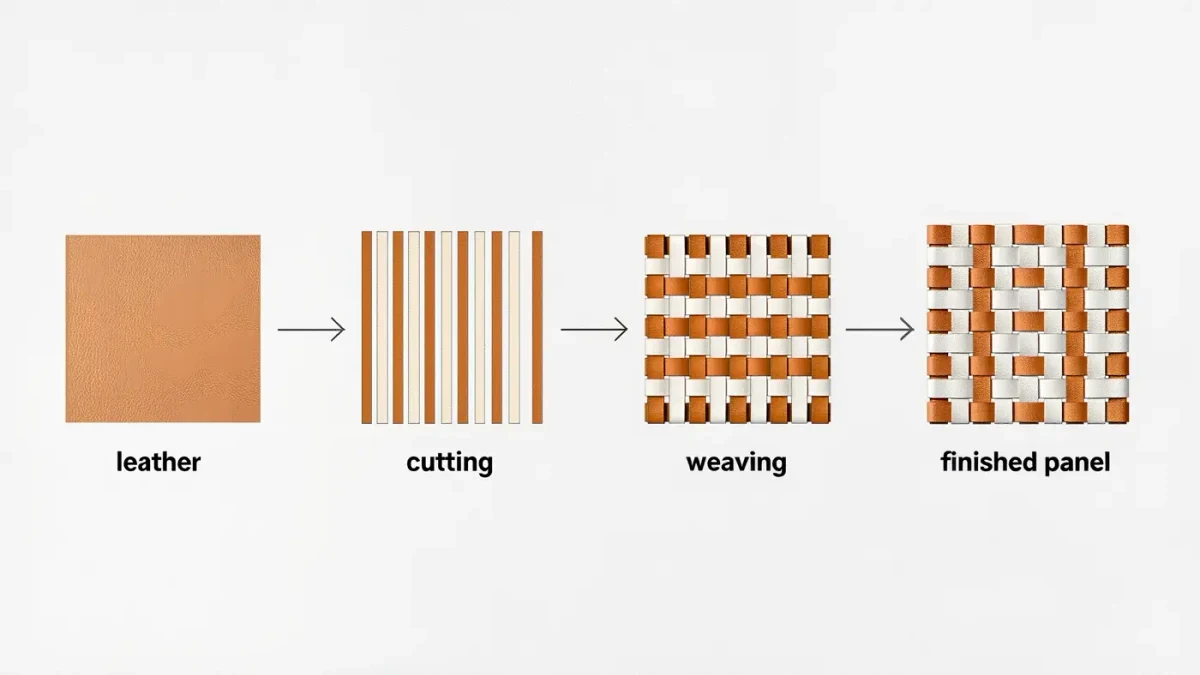
Trotter's debut, the spring 2026 collection, was shown in Milan on September 27, 2025. Per The New York Times, the show was a crafty debut in the literal sense: the intrecciato weave and the house's high-touch emphasis on craft served as the foundation of the entire collection. Wallpaper described the collection as being about a feeling of liberation, drawn from what it called the house's candy box of craft techniques; per Numéro, the debut read as a success, and Interview Magazine framed the moment inside a season when the number of female creative directors at major houses was shrinking.
Why is the craft-first reading significant?
Because Bottega Veneta's identity is unusually material. The house's founding proposition — no visible logo, the weave as the signature — makes its creative director's job closer to textile direction than to image-making. Trotter's stated emphasis on craftsmanship, detail, proportion and real-world use, per press coverage of the debut, aligns with that inheritance rather than competing with it.
The second chapter
Per reviews of the March 2026 show, Trotter's fall 2026 collection developed the debut's themes with a focus on movement and texture, including tactile furs in new colorways and silhouettes — evidence that the first chapter's craft premise is being carried forward rather than reset.
What does the appointment mean for the house's trajectory?
Bottega Veneta's recent history is a sequence of quiet rebuilders: Tomas Maier made the weave a business model, Daniel Lee industrialized its attitude, Blazy gave it wit. Trotter's first chapters argue for a fourth register — a craft-led wearability with a cooler, more linen-draped temperature. The June 2026 menswear and resort calendar will extend the record; so far, the documented collections suggest a house consolidating its material advantage rather than chasing its recent noise.
Her route to the job ran through ready-to-wear discipline rather than celebrity. Before Bottega Veneta, Trotter led Carhartt WIP and Lacoste — two houses where function and wearability are the product rather than the message — after earlier years at Jil Sander, per her appointment coverage. That background maps directly onto what reviewers found in September 2025: a debut judged on craftsmanship, detail, proportion and real-world use. In a season when Interview Magazine noted the shrinking number of female creative directors at major houses, the record carries weight beyond one brand.