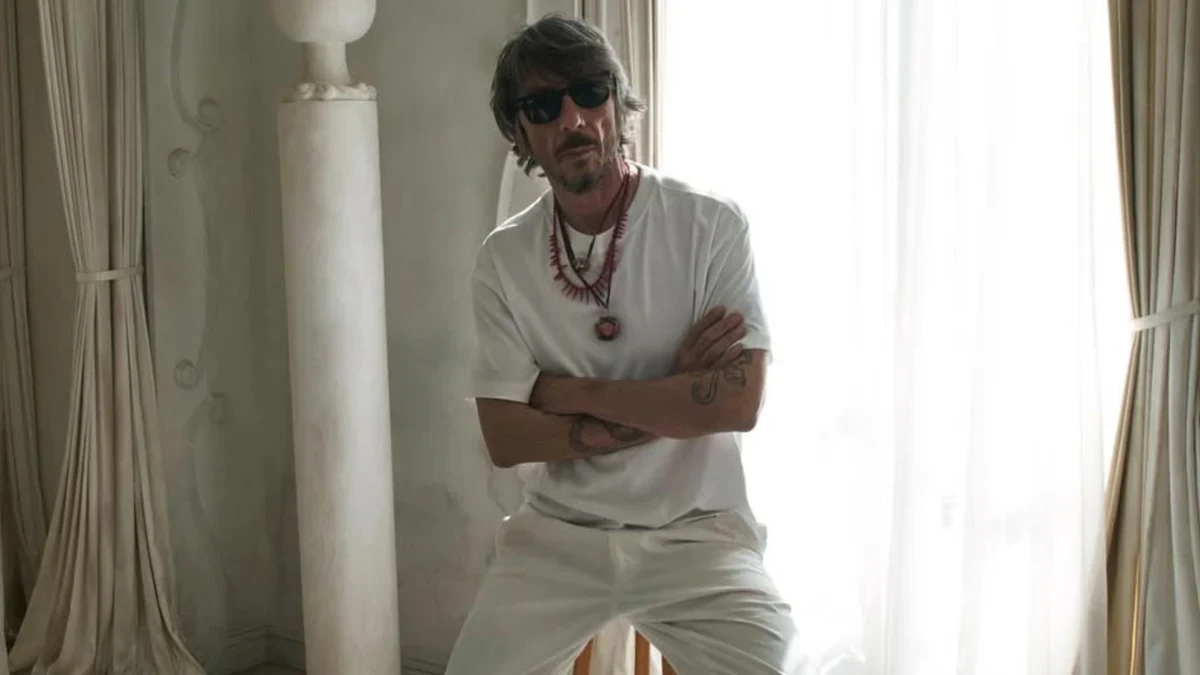
Kering and Balenciaga announced in May 2025 that Pierpaolo Piccioli, the longtime creative director of Valentino, would become Balenciaga's creative director, with the appointment effective July 10, 2025, per the official Kering announcement. The house stated its first collection under his direction would be unveiled in October 2025. The move completed the exchange set off by Demna's departure for Gucci and gave one of fashion's most confrontational brands its most classical designer in a generation.
Why does Piccioli at Balenciaga read as a reversal?
Because the two tenures it replaces and follows are opposites in method. Demna built the modern Balenciaga on subversion — the Triple S sneaker, runway stunts, clothing that argued with taste itself — and turned the house into a revenue engine for Kering. Piccioli's Valentino, by contrast, was built on couture fluency: color at monumental scale, fluid eveningwear, a romantic register that treated beauty as a serious subject. Placing that profile at a house founded by Cristóbal Balenciaga, the couturier's couturier, is less a hire than a thesis: that the brand's future lies closer to its founder's atelier than to its recent irony.
What did the debut actually deliver?
Per coverage of Paris Fashion Week, Piccioli's runway debut took place on October 21, 2025. The house followed the show with what it called its first campaign by Pierpaolo Piccioli, built on still and moving portraits that the maison framed as the start of a new era — an emphasis on portraiture over provocation that matches the appointment's logic.
The couture lesson
Balenciaga reopened its haute couture division in 2021 under Demna, an acknowledgment that the founder's name carries its strongest currency in the atelier. Under Piccioli, whose career was formed in that discipline at Valentino alongside Maria Grazia Chiuri and then solo, the lesson is applied directly: expect silhouette, color and construction to lead the conversation, with the streetwear vocabulary demoted rather than deleted.
Why does this matter beyond one house?
Because it closes the loop on 2025's churn with a clear pattern. Kering moved Demna to Gucci for heritage-scale disruption and installed Piccioli at Balenciaga for craft credibility — two different answers to the same question of what a luxury group needs from its maisons now. Whether romance outperforms provocation commercially will take years to measure, but the October 2025 debut made the direction unambiguous.
The institutional ground had been prepared for the shift. Balenciaga reopened its haute couture division in 2021 — the first time since 1968 that Cristóbal Balenciaga's closing discipline returned to the calendar — so the couture argument Piccioli embodies already had a stage. His Valentino record, built through the late 2000s and 2010s into one of the most collectible romantic wardrobes in luxury, gave Kering a designer fluent in exactly that register, and the October 2025 debut set the terms of the comparison critics will use for years.