At Gianni Versace's Autumn/Winter 1996–97 runway show, the makeup artist Pat McGrath covered the supermodels' faces in molten gold — skin lacquered and gilded until it read as sculpture — and one of fashion's oldest hierarchies cracked. The woman applying the paint, a self-taught artist born in Northampton in 1970, was no longer an anonymous hand executing a designer's vision. The documented rest of the story runs in a straight line: decades of the most credited backstage work in fashion, a 2015 product launch, Gold 001, that sold out on the day it was released, and a makeup brand reported in 2022 to be valued at over a billion dollars.
Who is Pat McGrath?
An artist who entered fashion without formal training in the trade, via the clubs and stylings of 1990s London and the fashion pages of i-D magazine, where she worked with stylist Edward Enninful on the graphical, daring beauty stories that made her name. By the mid-1990s she was working the major European shows, and her technique — skin treated as a material to be rebuilt, colour used at painting scale — set her apart from the polish the decade expected. Anna Wintour, writing in 2014, called her the most influential makeup artist in the world, a rare instance of the industry's highest editorial office naming a backstage artist outright.
What happened at Versace in 1996?
Gianni Versace's Autumn/Winter 1996–97 show, staged at the peak of the supermodel era, put gold on the face itself — a metallic, gilded skin rather than a lip or a lid — and McGrath's makeup did it. The image circulated as one of the decade's defining beauty pictures: the body as jewellery, the face as precious metal, the makeup credit as important as the casting. It fixed a template that high fashion still uses when it wants a face to carry the show, and it attached McGrath's name to the idea in the public record.
What is the new backstage authority?
It is the shift from service to signature. Through the 1990s and 2000s, McGrath and a handful of peers made the backstage credit a public one — named in reviews, photographed at work, followed between cities — so that the beauty look of a show became attributable, quotable and anticipated, exactly as a designer's silhouette is. Vogue's own coverage now treats the makeup direction of a collection as part of its authorship. That standing is a structural change: an art form whose makers were invisible for most of a century now has marquee names, and McGrath's is the largest.
From backstage to brand: what changed in 2015?
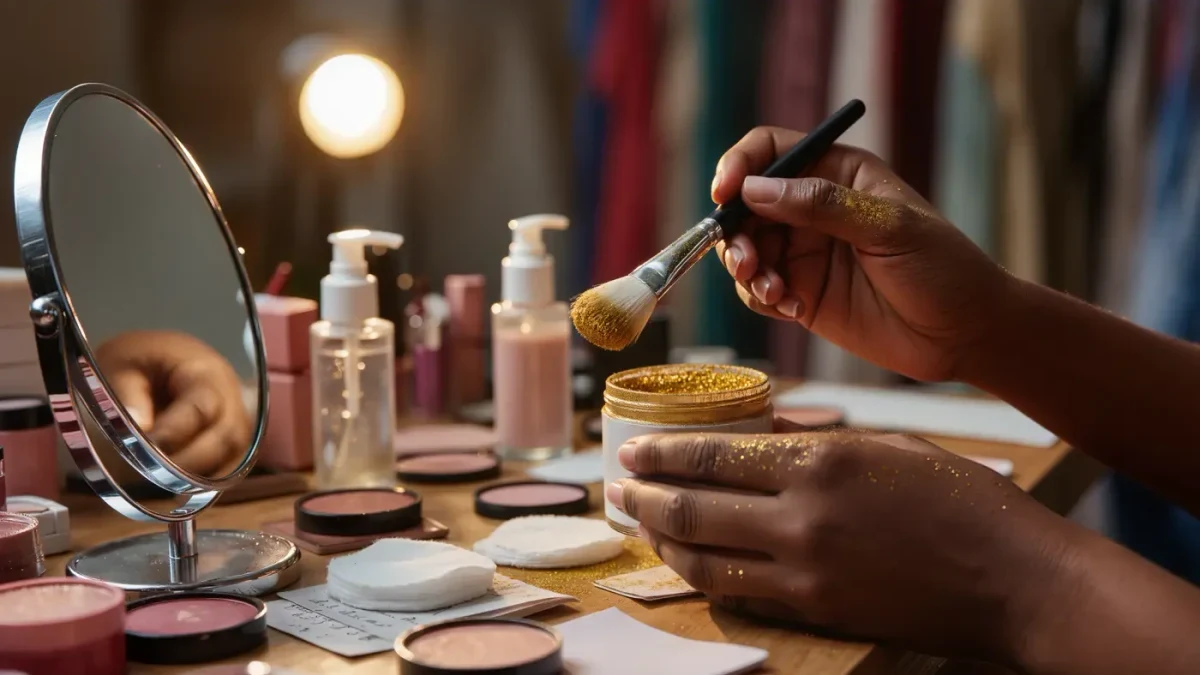
The author became the house. McGrath launched PAT McGRATH LABS in 2015 with Gold 001, a single gold pigment that echoed the Versace gesture two decades earlier and sold out on release; the label grew through limited drops into a full brand, and in 2022 it was reported as the first makeup artist-founded label valued at more than a billion dollars. The arc — gilded face in 1996, gilded company in 2022 — is the clearest demonstration that backstage labour, once credited properly, can own its own product. The hand now signs the bottle.
How did her technique differ from the decade's polish?
Where 1990s glamour defaulted to a matte, uniform finish, McGrath treated skin and colour as materials with their own behaviour — skin built in layers until it glowed like a separately lit object, pigment pressed and layered at painterly density, glitter, foil and crystal used as construction materials rather than decoration. The effects photographed as images in their own right, which is precisely why magazines and designers began requesting 'a Pat McGrath face' as a creative input rather than a finishing service. Technique of that visibility changes the economics: once the makeup is the story, the credit becomes a title, and the artist becomes a name the audience arrives knowing.
Was McGrath alone in raising the backstage credit?
No, and the movement is the context for her scale. The 1990s and 2000s produced a generation of named backstage figures — hairdressers and makeup artists whose show work was reviewed by name — reflecting fashion's broader shift toward crediting every author of the image, from stylists to set designers. What separates McGrath is the endpoint: conversion of credit into ownership. Peers signed product collaborations and lent names to lines; McGrath built and retained a brand reported to be worth more than a billion dollars, keeping creative control in the artist's own structure. The industry's new backstage authority, in its strongest form, is not visibility but equity — the face that made the gold now owns the mine.
What does the gold mean as an image?
Gold on skin is the oldest of beauty's metaphors — the body as treasure, the face as icon — and the Versace pictures understood that the metaphor reads best at maximum risk: an entire face, not an accent. That totality is why the image endured where safer metallic accents did not; it proposed that makeup could be the whole look of a show, a premise the industry spent the following decades testing and the 2010s confirming. The 2015 launch completed the argument's symmetry with a single product — a gold pigment, sold to the public, that let the customer perform the same gilding at home. Backstage had taught the gesture. The shelf finally sold it.
The number worth holding onto is the distance travelled: from an untrained teenager mixing colour in Northampton to the composer of a 1996 show image that still anchors retrospectives, to a founder whose company's valuation was reported at more than a billion dollars in 2022. Beauty history will file the gold face under 1996 and the billion under 2022, and the twenty-six years between them are the real subject — the period in which the industry learned to count a makeup artist's labour as an asset. McGrath did not merely benefit from that revaluation. Her career is the evidence that produced it.