In 1980 the Japanese cosmetics house Shiseido hired the French image-maker Serge Lutens to build its international identity, and over the following decade the company's advertising became one of the most recognisable beauty images of the century: pale, sculpted faces, lacquered red mouths and velvet backdrops, directed by Lutens and photographed largely under his instruction. The date is the point. Shiseido was a major manufacturer — founded in 1872 as a Tokyo pharmacy — yet its global face was authored, name by name, by a single hired intelligence. Beauty direction, the 1980s learned, could carry a signature.
Who is Serge Lutens?
Born in Paris in 1942, Lutens came to image-making through the beauty desk rather than the art school: from the late 1960s he designed makeup and imagery for Christian Dior, and through the 1970s he worked at the top of the magazine system, directing beauty pages alongside photographers of the rank of Richard Avedon. By the time Shiseido called, he was already a complete author — colourist, stylist, art director — in an industry that usually split those jobs between departments. The house did not buy a campaign. It bought a sensibility.
What did he actually make at Shiseido?
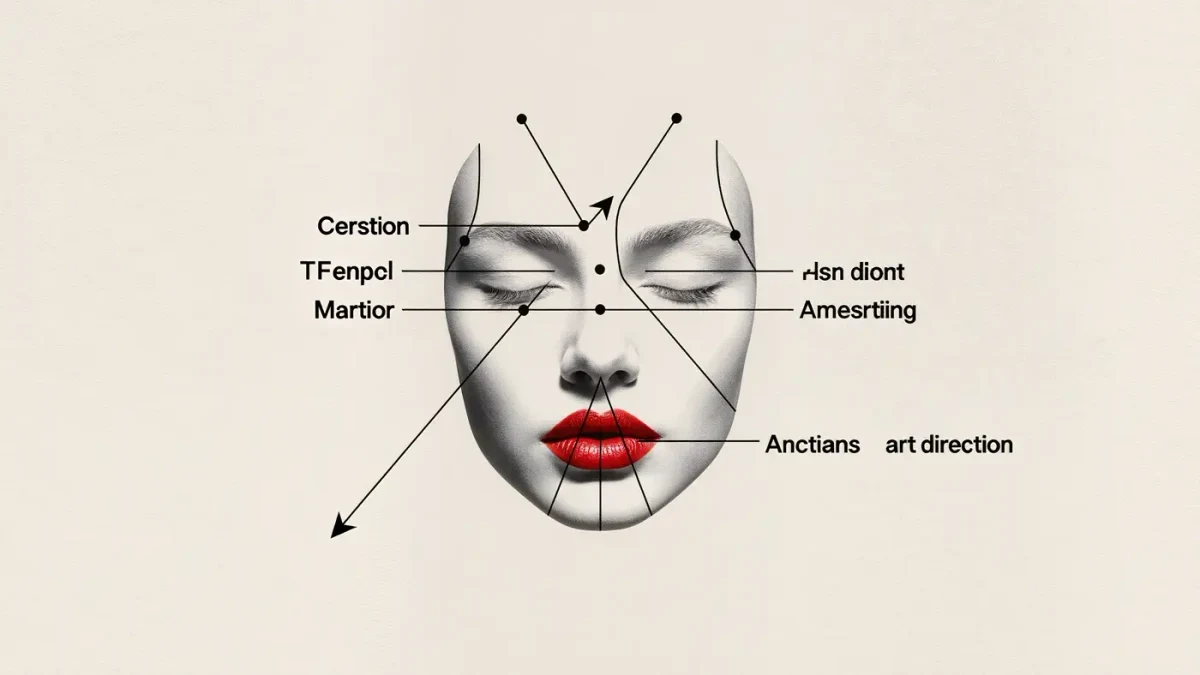
A coherent world. Lutens created the makeup colours — his palettes tuned for the house's international launch — and, crucially, the pictures: many of the 1980s advertisements were shot to his art direction, and a number were photographed by Lutens himself. The register was unmistakable — a face treated as a still life, powder pale as porcelain, a mouth of deep lacquered red, a shadow falling like theatre lighting. Nothing dated to a season; everything dated to a hand. He held the role for decades, and the imagery he built is now studied as the house's visual canon.
Was this beauty direction or auteurship?
The distinction is the story. Beauty direction assigns tasks; authorship imposes a worldview, the way a film director imposes one on a studio's output. Lutens at Shiseido is the beauty equivalent of that arrangement — an industrial scale, a corporate name, one signature vision — and the parallel became explicit in 1992, when Les Salons du Palais Royal Shiseido opened in Paris as his private universe of scent and colour, followed by the fragrance Féminité du Bois that same year. In 2000 the sign on the door changed entirely: Serge Lutens parfums became a label of its own, with the Palais Royal address as its headquarters.
Why does the Shiseido decade matter now?
Because it set the grammar for everything beauty branding now takes for granted: the creative director with a name and a face, the campaign image as a work signed rather than a brief executed, the idea that a cosmetics house can have an author the way a couture house has a designer. When a modern brand hires a known image-maker to articulate its beauty identity, it is repeating the 1980 arrangement in Paris and Tokyo. A face was the raw material. A name was the product.
What should the reader take away?
That the strongest beauty images are arguments, and arguments need authors. Shiseido's 1980s pictures survive because a single intelligence — colourist, director, photographer — was allowed to speak for a house that spanned the globe. Makeup as authored labour began, in its modern corporate form, with that appointment: 1980, one Frenchman, one Japanese pharmacy-turned-empire, one face at a time.
What did the Shiseido images actually look like?
The register was theatre more than cosmetics advertising. Faces were powdered to an even, pale field; mouths appeared in deep, lacquered reds and blacks; hair was bound, piled or lacquered into shapes that owed as much to Japanese stagecraft and North African ornament as to Paris; and the backgrounds sat in velvets and shadow, so the face emerged like a portrait in a dim gallery. Lutens drew on what he later called his two Orientals — Japan, his employer's home, and Morocco, where he kept a house — folding both into images that belonged to neither market's expectations. The pictures rarely showed a product in use. They sold a civilisation of the face, with the small printed name of the house beneath.
How does the Shiseido decade read today?
As the proof case for beauty as a directed art. Contemporary brands maintain named creative directors for beauty, credit campaign image-makers and treat a decade of consistent imagery as brand equity — all arrangements that Lutens' Shiseido years modelled at industrial scale, across markets that had never shared an aesthetic. His subsequent career completed the argument: the Palais Royal became a destination, the fragrances acquired collectors, and a 2004 documentary-scale retrospective of his imagery toured as art. When beauty journalism writes about a 'house image', it is using, consciously or not, the grammar he installed: that a cosmetics company can possess a style the way a couture house possesses a line.
What is the lesson for beauty brands now?
Consistency is authorship compounded. The Shiseido pictures succeeded not because any single image was astonishing but because a decade of them arrived from the same intelligence, so the house accumulated a recognisable inner world while its competitors accumulated campaigns. Modern beauty branding, with its rotating creative directors and seasonal image resets, struggles to buy that compounding effect — which is why Lutens' arrangement remains the aspiration and the reference. Hire a sensibility, protect it for years, let it sign the work. The face in the photograph will change with every season. The hand behind it, if the house is lucky, does not change at all.