Elsa Schiaparelli is remembered for the jokes, but she ran a company: a house at 21 Place Vendôme employing close to two thousand people by the late 1930s, producing twelve collections a year across couture, boutiques, knitwear, accessories, perfume and licensed stockings, all of it organised by a designer who had arrived in Paris in the early 1920s with no training and a talent, as she put it in her 1954 autobiography Shocking Life, for turning ideas into orders. The surrealism is the surface; the career beneath it is a case study in how to manage invention. The house closed in 1954 and reopened as a maison under new ownership in 2007 — a second life that, per the revived house's own announcements, claims her management as much as her imagery.
How did Elsa Schiaparelli start in fashion?
Failure first, then a sweater. Born in Rome in 1890 into an academic family, Schiaparelli had, by her own account in Shocking Life, already been expelled from a convent school, worked as a translator, and arrived in New York as an émigré before reaching Paris, where around 1927 she launched a collection of hand-knitted sweaters with geometric and illusionist patterns — the bow-knot and trompe-l'oeil designs that the French press noticed. A knitwear contract followed, then a couture house: by 1935 she showed from her own headquarters at 21 Place Vendôme, and the business grew at extraordinary speed through the decade, adding the Pour le Sport line in the early 1930s, the boutique La Rue Schiap in New York in 1934, and the perfume Shocking in 1936, whose moulded bottle of a flower-seller's torso in her signature pink became one of the decade's design objects.
What was 'shocking pink'?
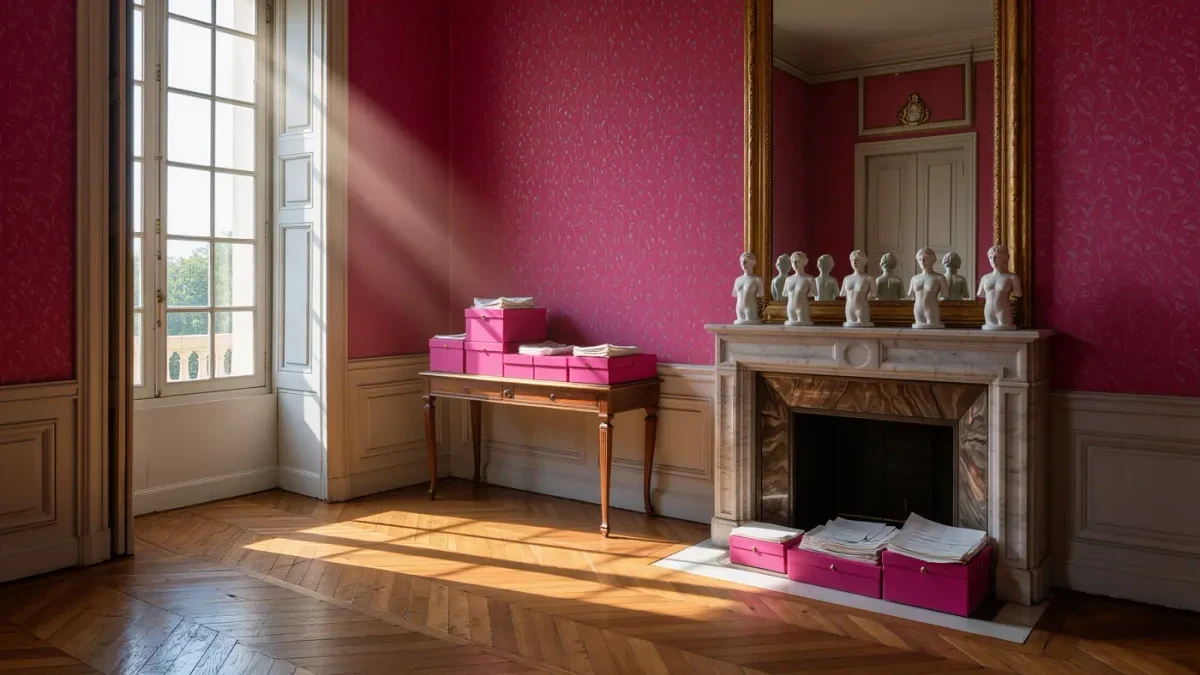
It was her corporate colour, and she treated it as one. Schiaparelli named a shade of vivid magenta — somewhere, per her memoir, between fuchsia and red — shocking pink, standardised it across dresses, boxes, bottles, tissue paper and the boutique's interiors, and made it a brand asset in the modern sense: recognisable at a glance, protected by use, inseparable from the name. The 1936 puffed and padded quilted jackets, whose bathtub-print lining she later printed with a pond pattern, belong to the same logic of total environment — a house whose every visible surface carried its argument. Colour management is an underrated part of her achievement: before corporate identity had a vocabulary, Schiaparelli was running one, and the revival maison's current identity, pink packaging included, restates the system she built.
Twelve collections a year and the Zodiac
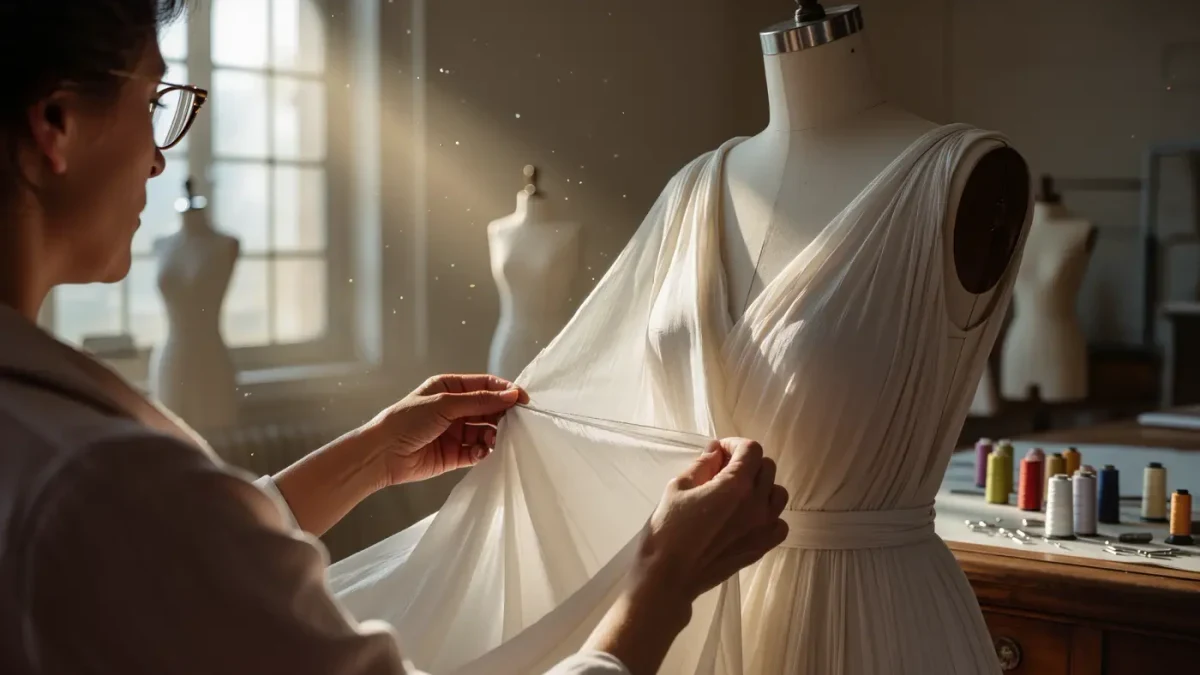
The pace explains the machine. Through the late 1930s the house delivered multiple lines a season across its departments, sustaining innovation by systematic production rather than sporadic brilliance: the 1938 Pagan collection drew on classical drapery, and the same year's Zodiac collection, shown before the war's shadow lengthened, built whole looks from hermetic signs — embroidered zodiac motifs, celestial fastenings — that were produced and sold, not merely exhibited. She organised the house into workshops with clear specialisations, licensed her name for stockings and gloves, and ran the New York boutique operation as an export channel for French design. The war shut the Paris house in 1940; she worked from New York during the conflict, and reopened in Paris in 1945. The postwar years were harder — Dior's New Look reset the decade's silhouette in 1947, and Schiaparelli's relatively unadventurous response, per the period's trade press, cost her standing — and in 1954 she closed the house, publishing her memoir the same year and leaving the field with the sentence she had earned: a good dress, she wrote, is one you can run for a taxi in.
Why did the house close, and what survived?
It closed on business terms: an aging founder, a changed silhouette, heavy wartime interruptions and a couture model the postwar market was repricing. But the assets proved durable. Schiaparelli's techniques — quilted and padded construction, novelty buttons cast as insects and zodiac signs, embroidered objects on evening wear, printed linings, the colour identity — passed into the general repertoire of fashion, and her demonstration that an art-adjacent house could be an operating company set a template for every designer business since. The name was revived in 2007, and under its current creative direction the maison has shown haute couture from Place Vendôme again, pink bottle and all. Schiaparelli died in Paris in November 1973. Her managerial achievement deserves the sharper headline: the surrealist who ran a house ran it well, and the house is the proof.
How did she manage the invention?
By division of labour. Schiaparelli's house ran with specialised ateliers for tailoring, dresses, knitwear, accessories and embroidery, a design studio that developed her motifs into producible styles, and a licensing desk that placed her name on stockings, gloves and hats without her direct supervision — the standard machinery of a modern fashion company, assembled a decade before the vocabulary existed. She took risks in concepts and controlled costs in execution, a balance the period's trade press credited for the house's survival through the Depression years. Her collaborations with artists were, in business terms, product development: novelty buttons, printed linings and embroidered motifs were manufactured at volume and priced into salable garments. The memoir's tone is deliberately breezy about all this — the Management reads between her lines: the surrealist house was, above all, a well-run one, and its collapse came only when war, age and Dior's silhouette combined against it.
Her relationship to the avant-garde was itself managed like a portfolio. Where other houses bought decoration, Schiaparelli commissioned series: with the painters and photographers of the Paris 1930s she developed fabrics, buttons, jewellery and theatre costumes as product lines, each manufacturable and each dated to a collection, per the house's records and the period press. This industrial approach to collaboration — commission, production, sale — distinguishes her from the decorators and explains the revival's ease: the maison that reopened in 2007 inherited not only motifs but a working method for turning artistic ideas into inventory. The current Place Vendôme operation, showing couture again since its relaunch years, still runs on the system she codified before the war.