Grace Wales Bonner works like a researcher who happens to cut clothes: each collection is footnoted to a place, a text or a photograph — the Black Atlantic, the Caribbean archive, Ethiopian modernism, the portrait photography of James Barnor and Rotimi Fani-Kayode — and her rise, from the 2015 Central Saint Martins graduate collection to the 2016 LVMH Prize for young designers to the Dior menswear appointment announced by the house in May 2025, has carried that method with it. She is, per the LVMH Prize citation, the first designer to win it with a collection explicitly grounded in Black cultural studies, and the industry's subsequent embrace — a Vogue modelling of her shows, museum commissions from Paris to New York — suggests the method is now the market's own vocabulary. Her work's premise is that identity is a library, not a mood board.
Where does Grace Wales Bonner come from?
From South London, with one English mother and one Jamaican father, and the Atlantic between them. Born in 1990 and raised in the city's south, she studied at Central Saint Martins, where her 2015 BA graduate collection, Afusion (titled in some accounts A Fusion), assembled 1970s tailoring, rastafari references and zoot-suit volumes into what the school and press framed as a meditation on black male identity; the stylist and editor Temple Anike Lawal's advocacy and the photographer Harley Weir's imagery, per contemporary reports, carried the collection into wider view. The thesis became a practice: she founded her label the same year, and in 2016 — at twenty-five — won the LVMH Prize, the youngest winner to that point and the first whose stated subject was diaspora itself.
What is the 'Atlantic wardrobe'?
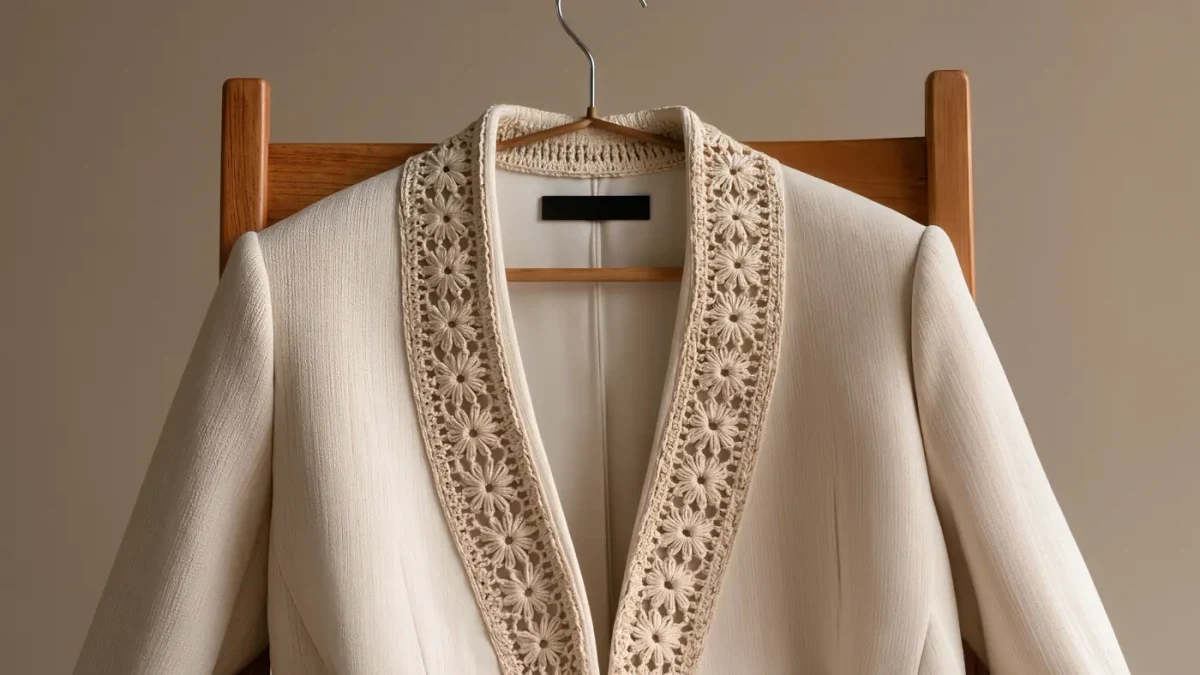
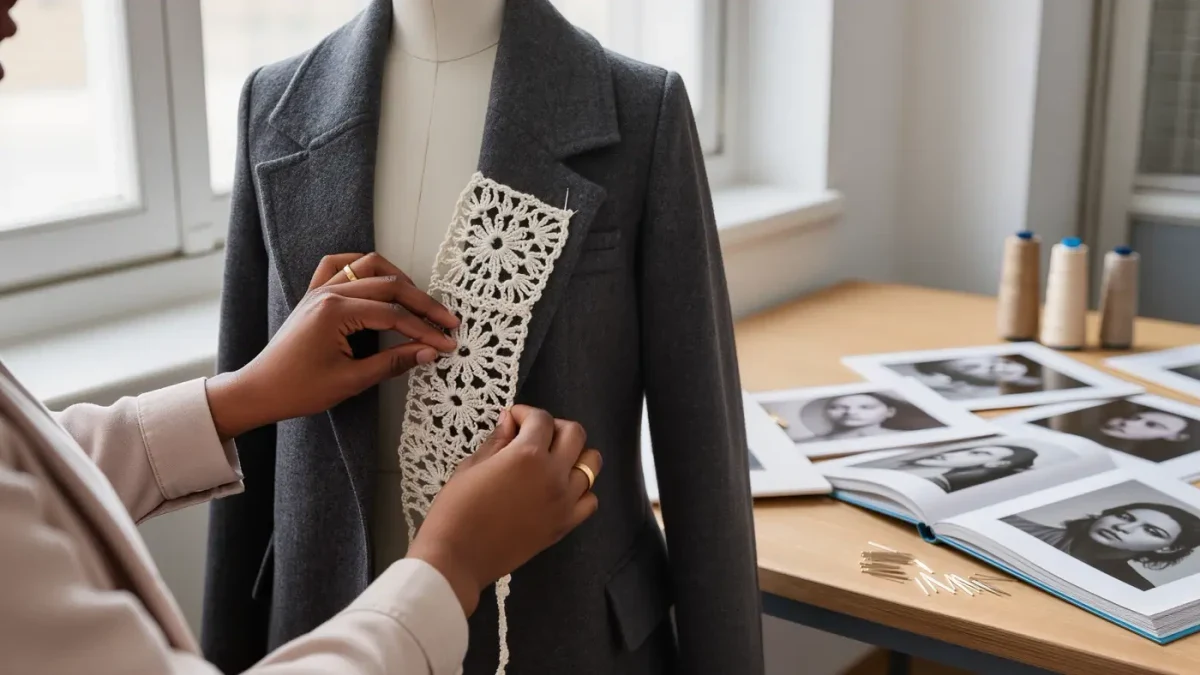
A working phrase for what her collections construct: a wardrobe compiled across the Black Atlantic, mixing British tailoring traditions with West African and Caribbean dress codes, Caribbean sports heritage, religious garments and the photographic archive of the diaspora. The collections carry their sources openly — Blues for Lala in 2017 for Lagos, the devotional Devotion shown at the 2018 Pitti Uomo as guest designer with a gospel choir, Morning Prayer staged in the American Academy in Rome, and the 2022 Serpentine-presentation season drawing on Brazilian composer-era archives; the exact sequence varies by season, but each is documented in the house's own show notes as a named cultural study with cited references. Her garments themselves — slender knitwear, hand-crocheted pieces, tailored coats with ecclesiastical lapels — function as the footnotes' garments rather than costumes: the points is that citation can be worn.
The scholar's collaborations
Wales Bonner's method has produced collaborations that read as research programmes. She has collaborated with Adidas Originals since 2020 on Samba-line collections that brought diaspora styling into sportswear retail at scale; she curated the 2022 exhibition A Time for New Dreams at London's Serpentine Galleries, pairing her garments with objects and archives from Black spiritual and literary traditions; and the Victoria and Albert Museum and other institutions have commissioned her presentation projects, extending the practice into curation proper. Her shows have cast performers — poets, musicians, dancers — and staged concerts rather than conventional runways, an approach that, per the house's communications, reflects her belief that the collection is an event in a cultural argument. Critics' caveats are on the record too: some reviews have charged the seasons with preciousness or with an archive-heavy pacing that prizes reference over wearability. Her response, consistently, is the clothes' own retail success — the label sells through major international stockists and its Adidas lines have been among the most in-demand sportswear collaborations of the decade.
Why does the Dior appointment matter?
Because a scholar-method has been hired by a heritage house to direct its menswear, the industry's most visible menswear platform after the announcement in May 2025 that Wales Bonner would become creative director of Dior men's wear, per the house's announcement and the trade press that followed. The appointment places the Black Atlantic wardrobe at the centre of a European luxury maison, and it validates the premises of her decade: that rigorous cultural sourcing is a luxury competency, that the diaspora wardrobe can carry couture-level tailoring, and that a designer trained as a researcher can run a major house. Wales Bonner's first Dior collection, due within the house's calendar, will test the method at LVMH scale; her own label's record — LVMH Prize 2016, a decade of cited collections, curation and collaboration — is the standing argument that the test will be passed with footnotes.
How does research become a garment?
Through a working pipeline her house has kept visible. Each season's study produces a palette, a set of fabrics — crochet, organza, wool twill, silk jersey — and a tailoring brief, and the references are answered in construction rather than print: a Ghanaian studio portrait becomes the posture of a coat, a gospel recording becomes a show's cast and staging, a religious vestment becomes a lapel's angle. Her show formats carry the same logic, casting poets, musicians and dancers alongside models, and the collaborations with Adidas since 2020 translated the method into sneakers and knitwear at retail scale, per both companies' announcements. The system's strength is that it scales without thinning: the references are documented in the show notes, the garments are wearable, and the museums' commissions — the Serpentine exhibition among them — treat the sourcing as scholarship in its own right. Few houses publish their footnotes; hers are part of the product.
Her institutional reception has tracked the scholarship. Since the 2016 prize she has been the subject of museum projects on two continents, per the institutions' records, and the press coverage of the Dior announcement in May 2025 treated her archive-conscious method as the qualification rather than a curiosity — a shift in how the industry reads a designer's sources. The house's retail records tell the same story from the other direction: the label's demand, particularly for the Adidas lines, has repeatedly outrun supply, per both companies' statements. A practice built on citation has turned out to be commercially load-bearing, which is the strongest evidence available that her premise — identity as a library — is now a shared one.