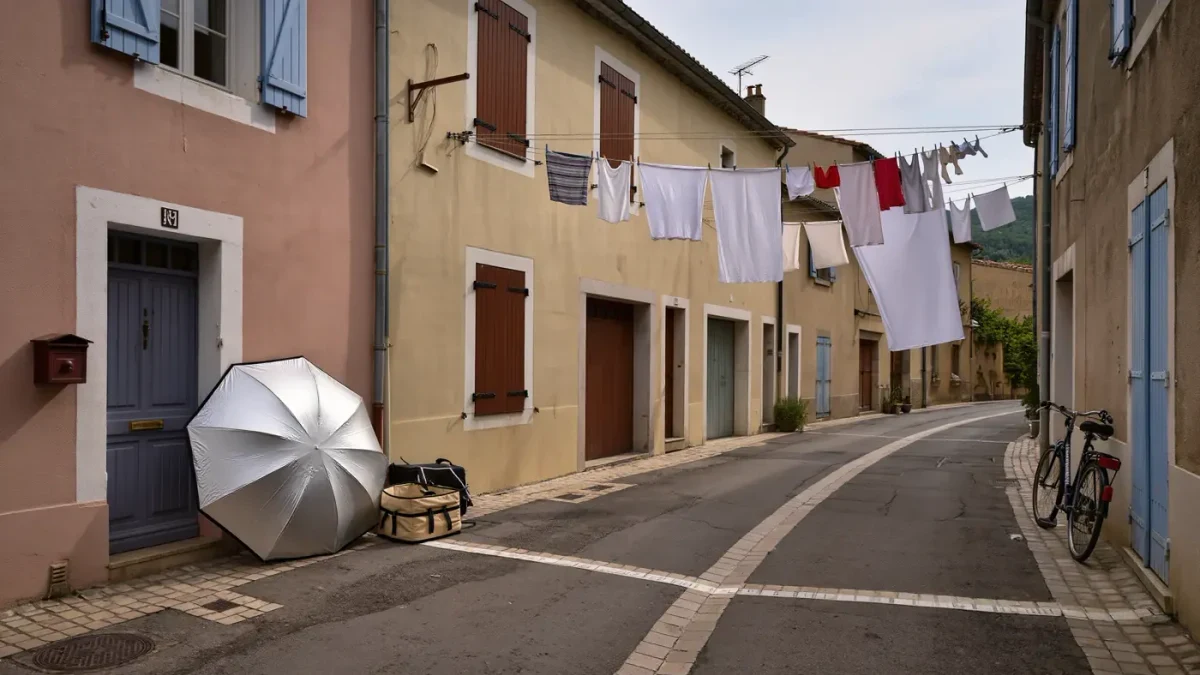
Sometime in the early 2020s, fashion campaigns stopped looking like campaigns. The studio spotlight gave way to available light, the posed model to someone glancing away from the lens mid-stride, the glossy set to an ordinary street in an ordinary town. The shift — the documentary turn — put photographers with reportage instincts at the centre of brand imagery: Zoë Ghertner's muted, intimate campaigns for Miu Miu, David Luraschi's candid scenes for Jacquemus staged in everyday French settings, Gray Sorrenti's grain-adjacent imagery for Loewe. Fashion did not abandon artifice; it learned to dress artifice as its absence.
What does the documentary turn actually look like?
Formally, it is a set of borrowed conventions: natural or available light, deeper focus than a campaign needs, subjects caught in gesture rather than arranged in pose, locations that read as found rather than built, and colour graded toward the muted rather than the saturated. The images quote the snapshot, the street photograph and the photo essay, genres whose authority comes from not appearing manufactured. Because fashion images are always manufactured, the style is best understood as a genre performance — the campaign as a fiction of non-fiction — but the performance is skilful, and at its best it produces images with more life than the studio tradition it replaced.
Why did brands want to look unbranded?
Because the audience changed its defences. Raised on advertising literacy and armed with feeds that filter obvious salesmanship, younger consumers discount polish: a glossy campaign announces itself and is scrolled past, while an image that reads as documentation borrows the credibility of the candid. The strategy also answered a reputational need after the 2010s — fashion had been criticised for fantasy at a moment when audiences wanted authenticity, relatability and the appearance of real life, however staged. A campaign that looks like a family snapshot claims to be about the wearer, not the brand, which is precisely why it works on the brand's behalf.
The photographers who built the style
The turn produced its own authorship. Zoë Ghertner's Miu Miu imagery made restraint the brand's visual signature — quiet rooms, soft light, faces photographed with the intimacy of a personal archive. David Luraschi's Jacquemus scenes distributed the label's Provence-inflected surrealism across ordinary street life: a bag treated as a public event, a look witnessed by strangers rather than models. Gray Sorrenti's work for Loewe leaned on youth, texture and the unfinished frame, images that feel interrupted rather than composed. Each translated a house's codes into the documentary register, proving the style is a language that can be spoken with an accent.
What are the costs of the natural look?
Honest accounting finds three. First, saturation: when every brand photographs its clothes as if accidentally, the differentiation the style promised evaporates, and the documentary image becomes as uniform as the studio one. Second, deception risk: imagery that performs candour invites scrutiny, and campaigns accused of staging "ordinariness" while selling luxury have drawn the exact cynicism the style was hired to disarm. Third, authorship drift: available light and loose framing can be imitated cheaply, so the Photographers whose sensibility carries the style command a premium, and brands that buy the imitation without the sensibility get neither polish nor presence.
Is the documentary campaign here to stay?
Its conventions are now infrastructure, and infrastructure persists even after fashion exhausts it. As of the mid-2020s the style remains the default register for brands courting younger consumers, while a counter-movement of high-gloss, couture-scale imagery reappears whenever houses want to signal a return to glamour — fashion's usual oscillation between intimacy and spectacle. The durable lesson is about attention rather than aesthetics: audiences trust what looks found, and they punish what looks bought. The documentary turn is that observation, monetised. When it stops working, fashion will photograph its campaigns to look like something else — perhaps like dreams again, which is where, a century ago, it started.
How did the style arrive so quickly?
Through converging pressures rather than one decree. Smartphone photography had already retrained the eye: a generation's visual norm became the honest, imperfect frame, and a studio campaign now read as another century. The cast-documentary mix of street-style photography during fashion weeks demonstrated that candid imagery could carry luxury codes credibly. Meanwhile production economics favoured the style — natural light and real locations cost less than constructed sets — and the photographer generation formed in the 2010s arrived with reportage instincts already suited to the brief. The documentary campaign was, in short, over-determined: every incentive pointed the same way at once, which is why adoption was near-universal within a few seasons.
What does the turn mean for creative direction?
That control has been quietly renegotiated. The studio campaign directed every pixel; the documentary register hires a sensibility and accepts accident, which changes the working relationship between brand and image-maker — the photographer's eye becomes the product, and the brief specifies a world rather than a frame. Casting follows the same logic, favouring faces with texture over faces with symmetry, and styling works by suggestion rather than display. Creative direction in this mode is closer to producing a documentary than painting a billboard: you choose the author, the place and the rules of interference, then trust the encounter. The houses that do it well understand this; the ones that stage candour frame by frame tend to produce the decade's least convincing images.