In 1994 the Whitney Museum of American Art mounted "Richard Avedon: Evidence 1944–1994," a retrospective that did something museums had been reluctant to do for half a century: it treated fashion photography as a major American art. Across five decades of prints — from his early Harper's Bazaar work through the Vogue decades to "In the American West" — the exhibition argued that Avedon's commercial pictures and his portraits belonged to one continuous practice, and that the mechanism binding them was motion. Avedon, who died in 2004, remains the clearest case that a fashion image can be an authored work with museum-grade consequences.
What did "Evidence 1944–1994" actually show?
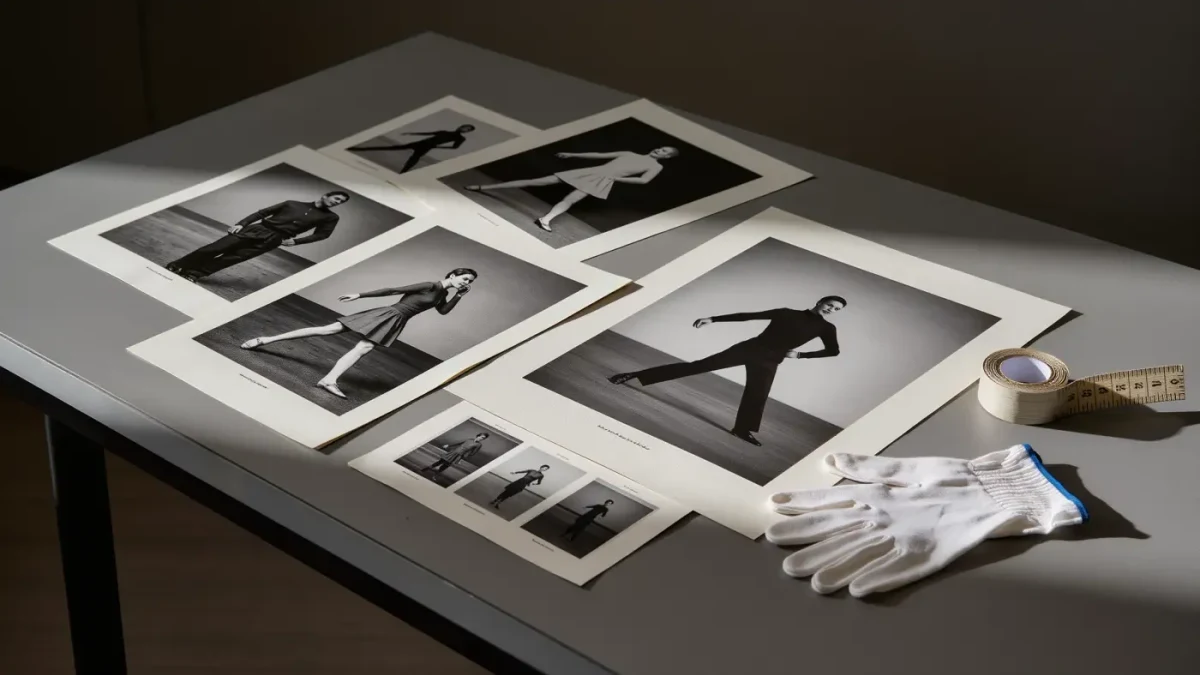
The exhibition assembled fifty years of work under a title that framed it as testimony rather than display: evidence of a career, but also of the century the camera had witnessed. Fashion editorials hung beside portraits of writers, artists and political figures, and the sequence made the continuities visible — the white seamless background Avedon used as both stage and void, the figure isolated mid-gesture, the conviction that a photograph catches a person in the act of being seen. For the fashion images in particular, the museum context reversed the usual hierarchy: the pictures were not documentation of clothing but primary works, with the garments reduced to props in a study of movement and self-presentation.
Why is motion the key to Avedon's fashion work?
Because he inherited a stiff, studio-bound convention and broke it on purpose. Arriving at Harper's Bazaar in the 1940s as a young staff photographer under art director Alexey Brodovitch, Avedon began sending his models into the street, into cafés, into jumps and turns — leaping over gutters in Paris, striding past real traffic — so that the photograph captured clothing in motion, worn by a body in action rather than displayed by a mannequin's stillness. The most famous example remains "Dovima with elephants" of 1955, photographed at the Cirque d'Hiver in Paris, where a black-and-white Dior evening gown meets the curve of an elephant's trunk: theatre, danger and elegance in a single composed stillness made of moving parts.
The empty studio that became a signature
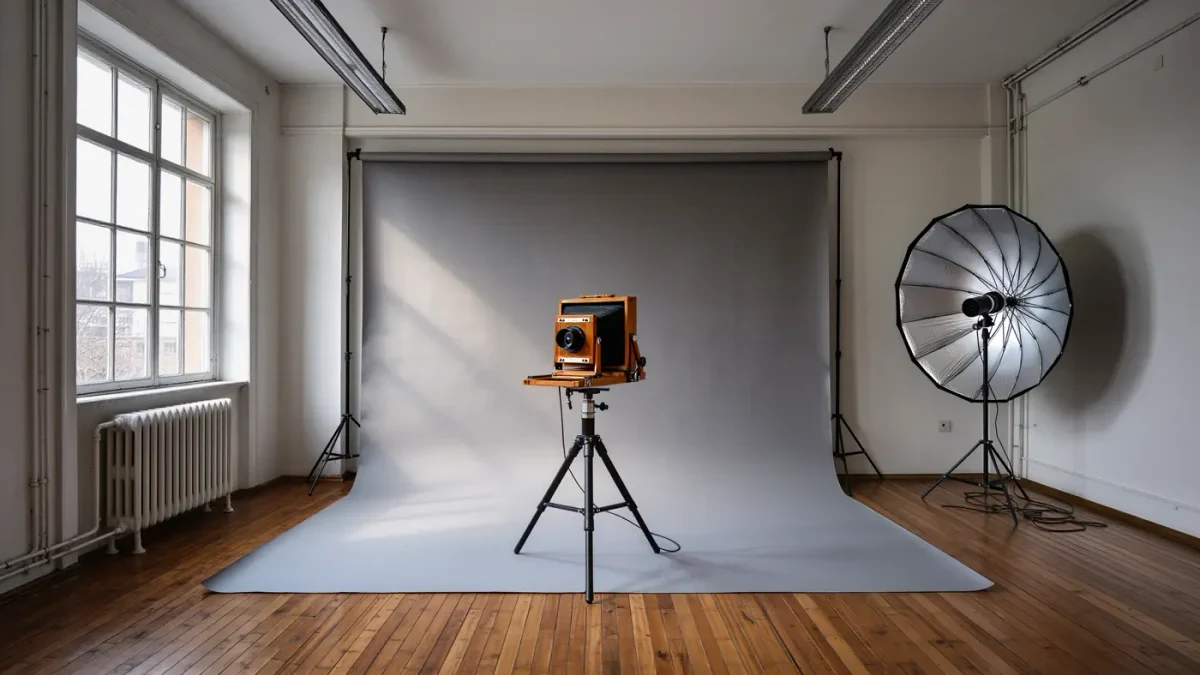
The other half of the invention was subtraction. Avedon's mature fashion and portrait work removed almost every environment, placing the subject against white or pale seamless paper so that nothing competed with gesture and expression. The contradiction is productive: the photographer of kinetic movement built his studio on a void, and the emptiness is what makes each motion legible. Fashion photography before Avedon often described places; his described states — stride, tremor, the instant before laughter — and that is what the Whitney's title, "Evidence," was quietly claiming the pictures documented.
What did the Whitney retrospective change?
It settled, institutionally, an argument that had run since the 1940s: that fashion photography's best work belongs in the museum's account of twentieth-century image-making. Major American museums had shown photography before, and Avedon himself was already collected, but "Evidence 1944–1994" was a full-career statement by an institution with the authority to fix a canon, and it placed commercial pictures — commissions for magazines and brands — inside that canon without apology. The retrospective travelled, and its catalogue became a standard reference. After 1994, the retrospective as a form was available to fashion photographers in a way it had not been before.
How did Avedon work within the magazine system?
As a salaried staff photographer, not a freelancer negotiating each assignment, and that position shaped the work. Decades at Harper's Bazaar and then, from 1966, at Vogue gave him the two things authorship requires: volume and continuity. The sheer number of assignments meant constant experimentation under deadline, and the institutional relationship meant his pages were recognisable as his regardless of the season, the designer or the model. The retrospective made this industrial reality part of its argument — these are commissioned works, made to sell issues and dresses, and their elevation to museum walls says something about both the quality of the commissions and the poverty of any definition of art that excludes them.
What is the retrospective's afterlife?
The 1994 exhibition established the template that fashion photography retrospectives have followed since: full-career scope, commercial and personal work integrated, catalogue as canon-fixing document, tour as international amplifier. It also fixed Avedon's public standing at a moment when photography markets were repricing their material, and his prints — editions of images originally produced in the thousands for magazine printing — entered a collecting category where authorship, not scarcity of the negative, sets the value. For students of creative direction, the useful residue is structural: Avedon's museum status was built on the same qualities a brand campaign needs — a recognisable signature enforced over decades, and images with enough life to survive removal from their original context.
How does Avedon read in the image economy of today?
As the origin of habits the industry now takes for granted. Movement as the sign of life in a fashion picture, the white studio void as the neutral stage every e-commerce page inherits, the model as a performing personality rather than a hanger — all of it descends from the practice the Whitney consolidated. There is also a cautionary lesson in the framing: Avedon insisted his photographs were opinions, not documents, and the "Evidence" title carried irony with it. Fashion photography sells propositions about how bodies should look; the museum's contribution was to say, in 1994, that propositions of this quality deserve to be argued about with the same seriousness as painting. Three decades on, that argument has been won — largely by the pictures themselves.