Before a single sketch, there is the board. A sheet of foam core, or a screen full of images, fabric scraps, and single words. It looks casual, almost like scrapbooking. It is not. For many designers and creative directors, the mood board is the first statement a collection makes, and it is made entirely in pictures.
That is why insiders sometimes treat the board like a manifesto. It declares what a season will feel like before any garment exists. Learn to read one, and the runway starts to make sense months early.
What a Mood Board Actually Is
A mood board is a visual collage of images, text, and samples of objects, arranged in one composition. It can follow a set topic or gather random material. Its job is to convey a general idea or feeling. Boards can be physical or digital, and they double as presentation tools.
In fashion, the board sits upstream of the clothes. Garment design works with color, texture, line, pattern, silhouette, proportion, and balance, and all of those parts must combine into one visual voice. The board is where that voice gets chosen. It decides which of the elements will lead and which will whisper. We covered a connected angle in What a Rebrand Actually Changes: Fashion Logos and Typography.
Why Insiders Call It a Manifesto
Manifesto sounds grand, but the fit is exact. A manifesto states intent before the work begins. So does the board. Creative teams use mood boards in branding work to stay on the same page and to hold to the image a brand wants to project. When a series of campaigns must feel like one family, the board keeps the concept steady. For related coverage, see The Fabric Swatch as Brand DNA: How Material Selection Defines a Designer's Vision.
The same logic runs a fashion house. A collection involves dozens of hands: pattern cutters, stylists, set designers, photographers. The board is the document they all answer to. If a fabric or a shade cannot defend itself against the board, it usually gets cut.
The Physical Board: Paper, Fabric, and Found Things
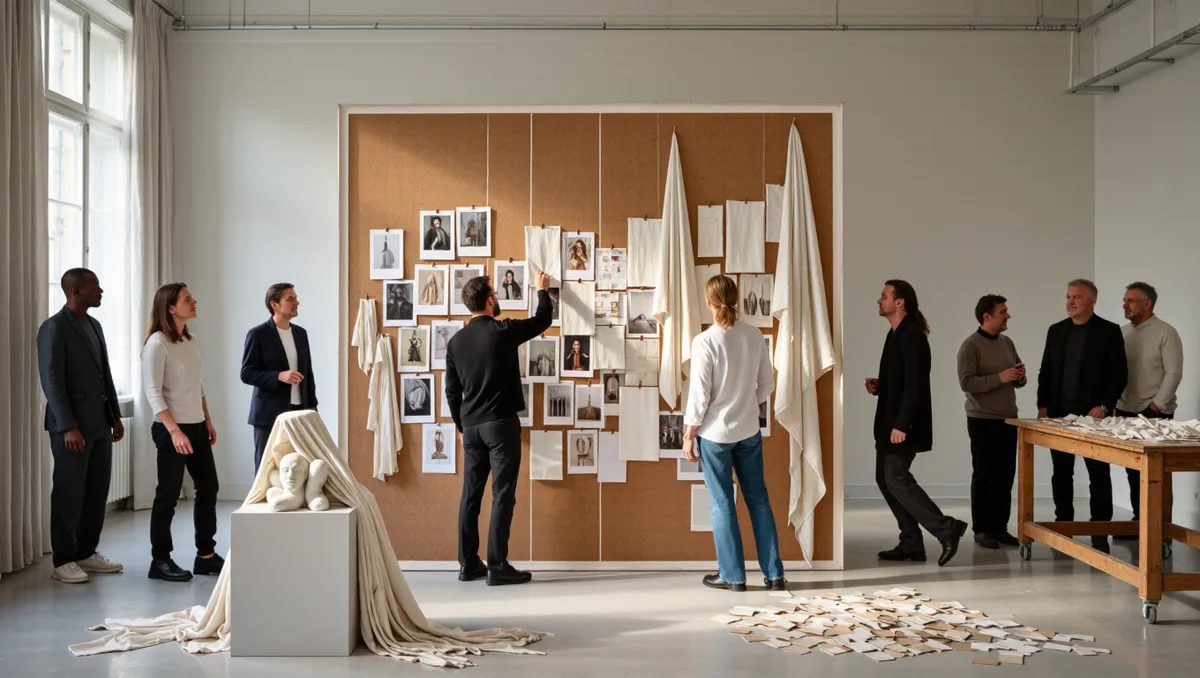
The classic version is tactile. A maker cuts a foam board with a scalpel and sprays cut-outs onto it. Cardboard, paper, and cork board serve as bases too. Food, music, and color can all carry the mood. Boards get dressed with string, stickers, tape, magazine pages, original art, personal photographs, and swatches of fabric.
That texture matters. A stapled swatch of raw silk says more about weight and shine than any picture of it. This is one reason fashion people stay loyal to paper boards. The hand learns things the eye alone misses.
The Digital Board: Sharing a Mood in Real Time
Digital boards trade touch for speed. Built in design software or gathered on sharing sites, they allow easier collaboration and faster changes. Users often assemble them from images other people have shared online, building a vision no single person could source alone. A studio in Paris and a mill in Italy can look at the same board the same minute.
The risk is sameness. When everyone pulls from the same shared images, palettes drift toward the familiar. Strong creative directors fight this by anchoring digital boards with physical finds: a button, a ribbon, a page torn from an old book.
How to Read a Board Like an Editor
Start with the palette, because it sets the emotional temperature. Then read the surfaces: how many matte, how many glossy, how many in between. Note the references, from film stills to street photography, and ask what decade or attitude they share. Read any words on the board as binding, not decoration. Finally, imagine the body: which shapes would carry these colors and surfaces well.
Conclusion: The Garment Arrives Last
A mood board is an argument made of pictures, and the collection is its evidence. The clothes may take a year to arrive, but the decision about how they should feel gets made on day one, in a room with a board on the wall. Read the board and you have read the intent. The runway merely confirms it.