A fashion show is three productions at once: the collection walking the runway, the set and sound built around it, and the audience arranged to be seen watching. The third is easy to underrate and impossible to ignore — the front row at a major house is a cast in its own right, its composition planned with the care of a lineup, its most famous seat occupied by Anna Wintour for decades, its celebrity rows since the 2010s generating the images that carry a show far beyond the room. Seating is not hospitality. It is the brand's argument about its own hierarchy, written in chairs.
What does the seating chart actually communicate?
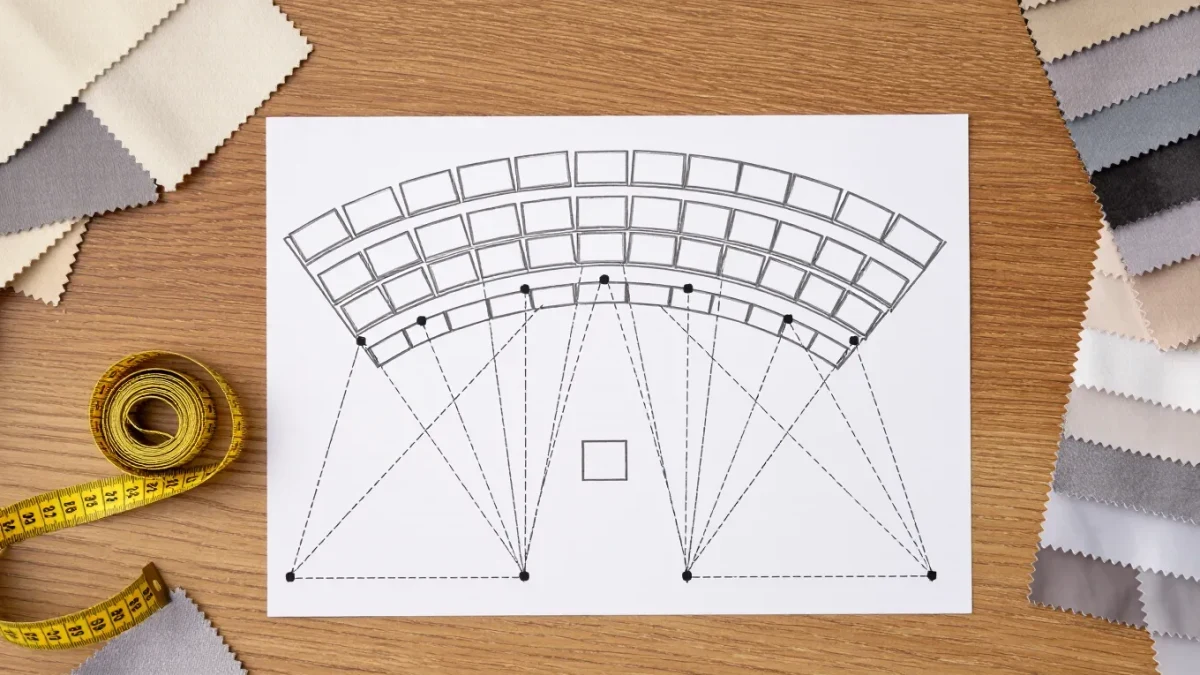
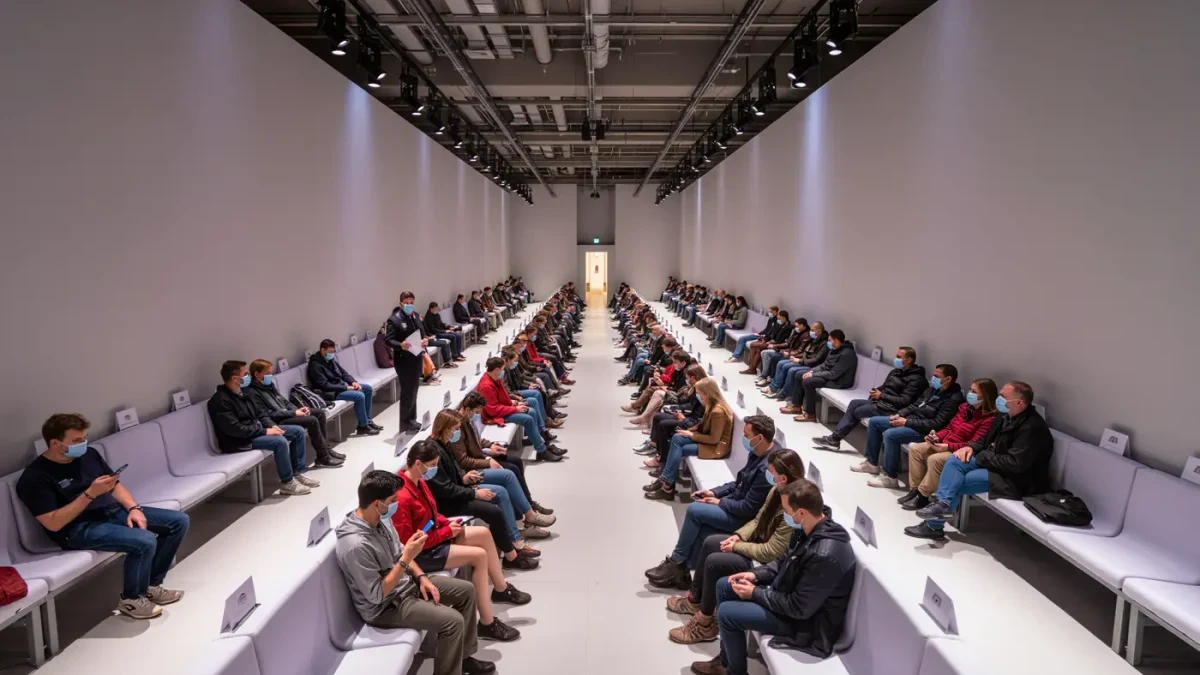
Everything the brand wants known about its alliances and ambitions. The first row is a ledger: editors whose coverage matters, retailers whose orders matter, celebrities whose reach matters, artists and architects whose proximity confers seriousness. Who sits next to whom, who is placed at the end of the row for maximum photographability, who attends at all — each decision is read instantly by the trade as a statement about the house's direction, which is why seating charts are approved at executive level and guarded like manuscripts. The room's shape speaks too: a long straight runway distributes attention democratically, while an intimate setup converts the show into a salon, the audience folded into the work itself.
How do sound and set steer the same argument?
By scoring and framing the audience's experience. The show soundtrack — a craft perfected over decades by specialists such as Michel Gaubert, who built scores for the major houses across the 1990s through the 2010s — sets the collection's emotional register before the first look is read, and a memorable score can brand a season as firmly as any garment. The set performs the same work in space: Raf Simons's couture debut for Dior in July 2012, its walls of flowers reported in the hundreds of thousands, announced a house returning to beauty at scale before a single dress appeared. Set, sound and seating form one instrument played on the audience simultaneously.
The camera row
The 2010s changed the audience's function permanently. As shows became content, the people watching became imagery: phones raised along the runway, front-row celebrities photographed attending rather than looking, arrival videos competing with the show itself for reach. Houses responded by casting the front row the way casting directors cast runways — booking celebrity attendance weeks ahead, seating for the camera positions, timing arrivals. The show now runs on two stages, the runway and the room facing it, and only one of them rehearses its lines.
Who decides all of this?
A production apparatus that rivals theatre's. Show producers coordinate the venue, build and rehearsal schedule; the house's communications team manages invitations and placement with diplomatic care; music directors and set designers deliver their elements on brief; casting's walking order is tuned to the room's sightlines. The creative director sits atop the process, but the front row's choreography is largely institutional memory — decades of relationships, debts and signals compressed into a seating plan that must read correctly from every angle, physical and photographic. A mis-seated editor or an unbooked celebrity is reported as news, which is the measure of how much meaning the plan carries.
Is the front row still powerful in the livestream era?
Its function changed rather than shrank. When shows stream globally, the room's commercial work — orders, relationships, the whispered first reactions of buyers — remains as necessary as ever, while the camera row's cultural work has grown, feeding the social distribution that the livestream alone cannot supply. The seating chart is therefore one of the last genuinely strategic documents a house produces each season: it decides who interprets the collection to the industry, and who carries it to the world. Fashion measures its hierarchies in many units, but the front row is where they are physically built, twenty minutes at a time, one chair at a time.
How is a show actually produced?
On a schedule measured in weeks and a floor plan measured in centimetres. A venue is contracted and rebuilt — floors laid, power rigged, seating grown to specification — while rehearsals walk the models through the space's real dimensions; lighting is programmed to the garments' colours, and the soundtrack is cut to the walking pace expected of the lineup. On show day the apparatus runs like theatre: calls, cue sheets, a house manager balancing the arrivals of the audience against the readiness of the cast. The effort exists to produce roughly fifteen minutes of experience, and the disproportion is the point — fashion shows are among the most expensive minutes in commercial culture, spent on the argument that a collection deserves a world.
What happens when the audience becomes the story?
The industry has begun formalising what it once pretended not to stage. Celebrity attendance is negotiated as media placements; houses seed the camera row with the personalities whose images will travel; and some shows seat cameras where the front row once sat, reserving the human lineup for the livestream's establishing shots. The risk is circularity — a room designed for its own documentation can drift toward self-reference, the audience watching itself watching — but the craft logic survives intact: every season, the seating plan still decides whose interpretation of the collection reaches the industry first, and whose photograph of attending reaches everyone else before the reviews are written.