The clothes speak for fifteen minutes; the set has already delivered the speech. Runway scenography — the designed environment a show happens inside — has become one of the strongest voices in fashion's communication, and its most prominent author works across fashion and music simultaneously: Es Devlin, the British artist and stage designer whose sets for Louis Vuitton's women's shows under Nicolas Ghesquière have run since his debut in 2014, alongside stage worlds for Beyoncé, U2 and Adele. When a house wants to say what a collection cannot, it builds a room, and increasingly it hires a named artist to build it.
What does a show set actually do?
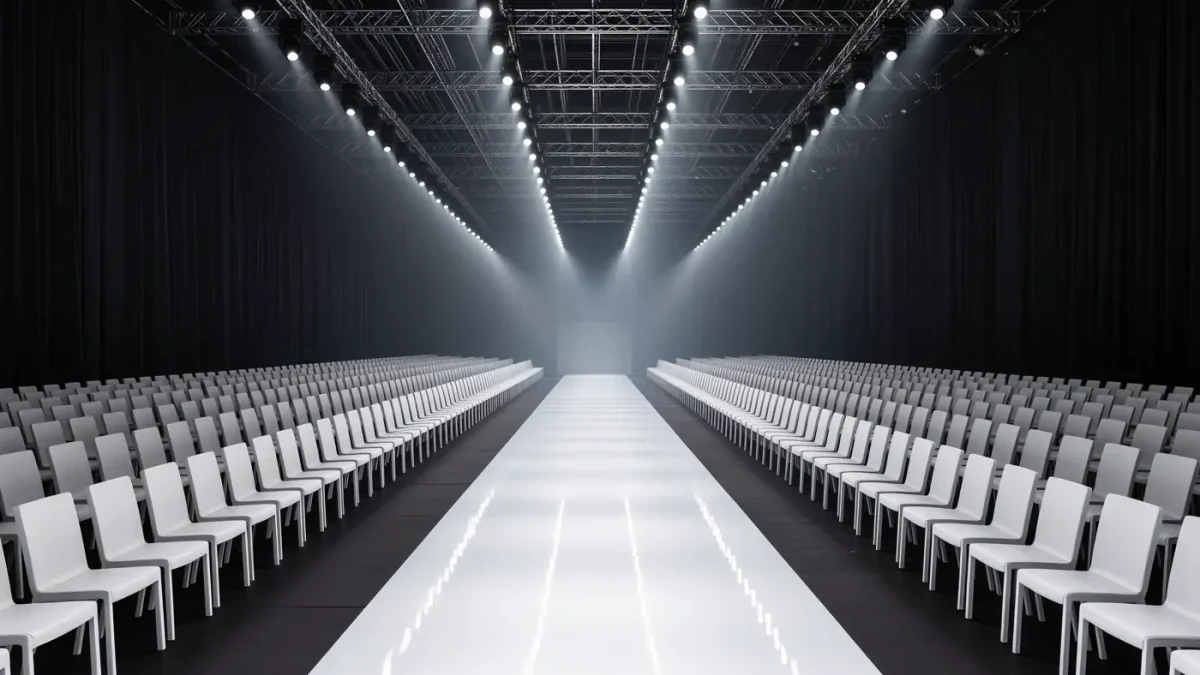
Three things at once, in the minutes before anyone reads a hemline. It frames: a runway through a mirrored maze, a beach, a supermarket, a fountain tells the audience how to read what walks it. It contextualises: the set places a collection inside an argument — about domesticity, technology, ecology, heritage — that the garments alone would take a critic a paragraph to state. And it produces images: the set is the show's establishing shot, the backdrop every photograph and livestream frame is taken against, chosen with the knowledge that most of the world will meet the collection through it. In commercial terms the set is the collection's first look, worn by the room.
How did set design become named authorship?
Through the theatre's migration into fashion's budget lines. Fashion shows borrowed stage designers quietly for decades, but the 2010s made the collaborations public: Devlin's Louis Vuitton environments — kinetic mirrors, light volumes, sculptural stages — were credited and reviewed as works in themselves, and her parallel career in pop staging gave the practice its own celebrity. Museums and biennales now exhibit fashion scenography, prizes follow the designers, and a set designer's signature is discussed the way a photographer's or casting director's is. The profession's elevation tracks a simple market fact: as shows became global content, their environments became brand assets, and assets get authors.
The canonical environments
The genre's landmarks show its range of speech. Karl Lagerfeld turned the Grand Palais into a functioning supermarket for Chanel's fall 2014 collection and a literal beach for spring 2019 — environments so legible they were absorbed into the collections' names and criticism without explanation. Fendi staged its autumn 2016 show above the Trevi Fountain, models walking a transparent runway across the water, a setting that merged house mythology with the city's own. Devlin's Vuitton stages work by abstraction rather than quotation — mirrored volumes and engineered light — proving the set can argue philosophically as well as scenographically.
What does the set cost, and what does it return?
The economics are scrutinised whenever a house claims environmental responsibility, and honestly assessed, scenography is expensive theatre: engineered structures, flown scenic elements and weeks of build for a single performance. The return is measured in attention — the set gives the show its headline image, differentiates a season in a crowded calendar, and can carry a collection's meaning further than the clothes, which is why houses defend the spend even while trimming elsewhere. The recent shift toward recyclable and reused builds responds to the criticism without surrendering the function: the room must still speak, only more carefully about what it is made of.
When the set talks, what should the audience hear?
A sentence written by committee and signed by an artist. The scenographer translates a creative director's brief into spatial rhetoric, and the best results — Devlin's included — read as collaborations rather than decoration: environments that change how the clothes move, how the light meets them, how the viewer's memory files the whole performance. For the audience, the practical reading is simple: when a show opens inside a forest of mirrors or a tide of fog, the house is telling you what to think before the first model moves. The set designer does the talking. The clothes, thereafter, have only to agree.
How does a set get designed and built?
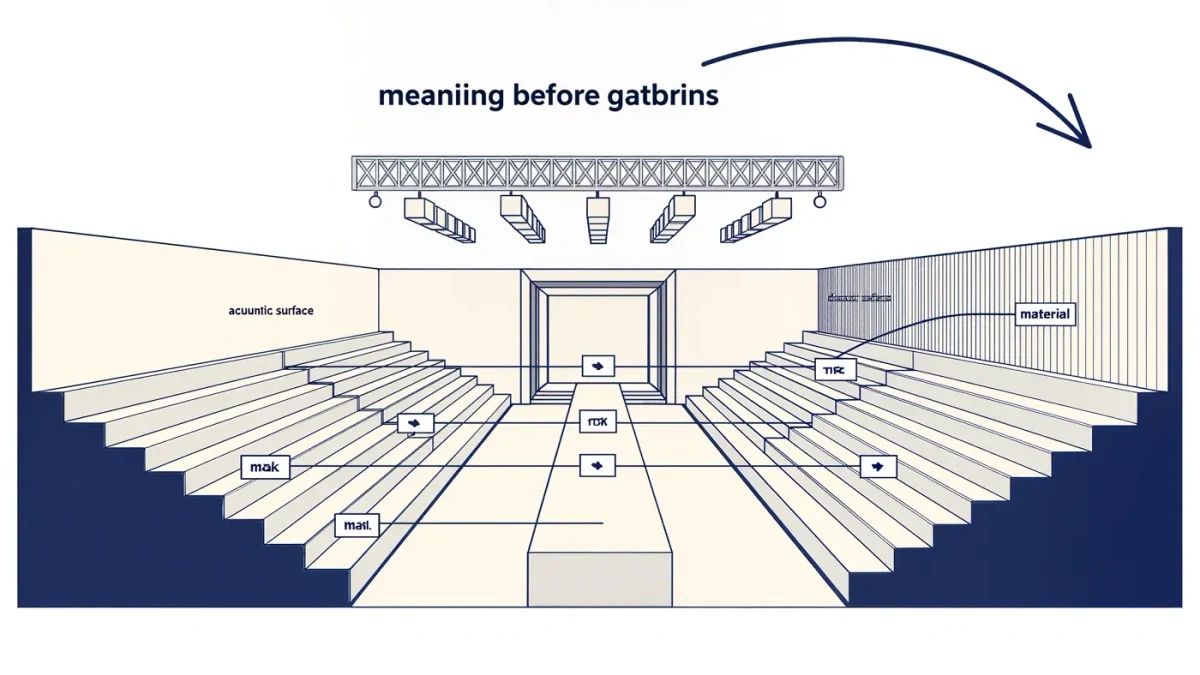
Through a compressed pipeline borrowed from theatre. The scenographer receives the collection brief months ahead, answers with sketches, then physical and digital models; the approved design enters engineering — structure, rigging, fire and crowd safety — while the build occupies the venue for days or weeks before the show, followed by lighting programming calibrated to the garments' actual colours under the actual lamps. After a single performance, strike begins, and increasingly the design specifies reuse: modular scenic elements, rental steel, recyclable materials. The set is architecture with a one-day lifespan, which is precisely why its authorship is now taken seriously — the constraint forces invention.
What separates a good set from a distraction?
Subordination and precision. The great fashion environments change the terms on which the clothes are perceived without competing with them: a mirrored stage multiplies the movement, a bare concrete floor hardens it, a beach softens every hemline's formality. Weak sets reverse the priority, becoming spectacle the audience photographs while the collection dissolves into scenery — a failure of direction rather than of design. The scenographer's real skill, on this reading, is rhetorical restraint: choosing the one spatial statement the season needs, engineering it flawlessly, and letting the clothes walk through an idea strong enough to carry the house's name in every frame it produces.
Where is scenography heading next?
Toward portability and permanence at once. As brands livestream globally, sets are engineered first for the camera, and some houses now design environments intended to be toured or rebuilt across cities, extending one show's investment through a season of repetition. Museums continue to acquire and restage fashion scenography as exhibition material, giving the sets a second life their designers half-expected. The direction of travel is clear: the room a collection walks through is no longer packaging to be discarded but an authored work that travels, gets reviewed, and accumulates a history of its own — judged, increasingly, as art.