Fashion journalism is a business before it is a criticism, and the money comes from three places: advertising, affiliate commerce and sponsorship. A publication that covers a designer's collection is, at the same time, an enterprise selling something — as Wikipedia puts it in its plain definition of a business, the practice of making a living by producing, buying or selling goods and services, or any activity entered into for profit. The coverage you read is that product. The question worth asking of any fashion story is not whether money is involved. It always is. The question is whether the money can reach into the sentence.
This piece walks through each funding stream in turn, explains what it buys and what it cannot buy, and offers a short practical method for reading any fashion publication — including this one — with the economics in view. The honest answer up front: independence in fashion media is not a fact about a masthead. It is a set of habits, visible on the page, that a reader can check.
The stakes are particular to this beat. Fashion coverage sits closer to its advertisers than almost any other journalism. The houses that buy pages in a magazine are the same houses whose collections the magazine reviews. That proximity is not a scandal; it is the structure of the field. What matters is how each publication manages it, and how a reader can tell the managed from the unmanaged.
How does advertising actually work in fashion media?
Advertising is the oldest stream. A house, a beauty group or a retailer pays for space — a printed page, a digital banner, a video slot — and in exchange gets placement next to the publication's editorial. The transaction is simple and, on its face, clean: the advertiser buys access to the reader's attention, not the reader's trust. Nearly every commercial publication signals the stream openly. The business-news network CNBC, for example, maintains a public "Advertise With Us" channel on its site — a standing invitation that says, in effect, that the advertising relationship is a normal commercial function of the operation, separate from the newsroom's product.
The difficulty is not the ad itself. It is the halo. A reader who sees a house's campaign across eight pages of a September issue may reasonably wonder whether the review of that house's show, forty pages later, is written with the same freedom as the review of a house that bought nothing. A well-run publication answers that question with structure: a wall between the sales desk and the editors, disclosure of advertising relationships where they are material, and a visible willingness to criticize advertisers. A badly run one answers with silence. The reader can only judge by what appears on the page.
What is affiliate commerce, and what does it change?
Affiliate commerce is the newer stream and the one most readers understand least. When a publication links to a product at a retailer and the reader buys it, the retailer pays the publication a small commission. Nothing is added to the reader's price. The economics are quiet, which is why they spread: shopping edits, gift guides and "where to buy" boxes are cheap to produce and pay continuously after publication.
What it changes is subtle. An affiliate model rewards writing that moves product. It does not require dishonesty — a genuine recommendation can still be a genuine recommendation — but it tilts the incentive toward enthusiasm and toward items that are easy to buy. An editor under an affiliate model has little reason to write about a made-to-order gown no reader can click and purchase, and every reason to write about a coat in stock at three retailers. Over time, that tilt shapes what gets covered at all, not just how it is described. We have written about this dynamic directly, from the inside of a shopping edit: Shopping the Season Well: What an Editor's Amazon Fall Edit Teaches About Buying Fewer, Better Things examines what a commissioned edit can and cannot honestly do. This connects to our earlier piece, Shopping the Season Well: What an Editor's Amazon Fall Edit Teaches About Buying Fewer, Better Things.
The reader's protection here is disclosure. Reputable publications label affiliate links plainly. The absence of a label is itself information.
Where does sponsorship end and editorial begin?
Sponsorship is the stream with the sharpest edge. A sponsored post, a branded supplement, a trip to a show paid for by the house showing there — each sits on the border between commerce and coverage. The rule that separates the defensible from the indefensible is labeling. Sponsored content that is clearly marked is advertising wearing editorial clothes, and a reader can weigh it as such. Sponsored content that is not marked is something else entirely, and no serious publication should produce it.
Press access raises a related question. Fashion weeks run on invitations; houses decide who sits in the room. A publication that attends shows is attending as a guest of the industry it covers. This is not unique to fashion — the arts press reviews exhibitions it enters on a curator's list — but the closeness is greater, and the reader should know it. The structural facts of the season are worth holding onto: the calendar, the venues, the appointments. Our explainer on Fashion Week Explained: What Actually Happens and Why It Matters sets out that machinery, which is the same machinery the funding flows run through.
What sponsorship cannot legitimately buy is a verdict. A review that praises a collection because the house sponsored the trip is not criticism; it is a receipt. The test a reader can apply is whether a publication ever turns against its own funding base — whether the houses that advertise also get pans when the clothes warrant them. A masthead that pans its advertisers is structurally independent, whatever its ownership.
What does editorial independence actually look like on the page?
Independence is not a mood. It is a set of checkable habits, and the reader can audit them without knowing anyone inside the building.
- Labeling. Sponsored and affiliate material is marked, in plain language, at the point of the link or the top of the piece. Vague labels — "partner content" in small type — count against, not for.
- Separation of voice. Sponsored copy reads differently from editorial copy. When it reads identically, the wall has failed.
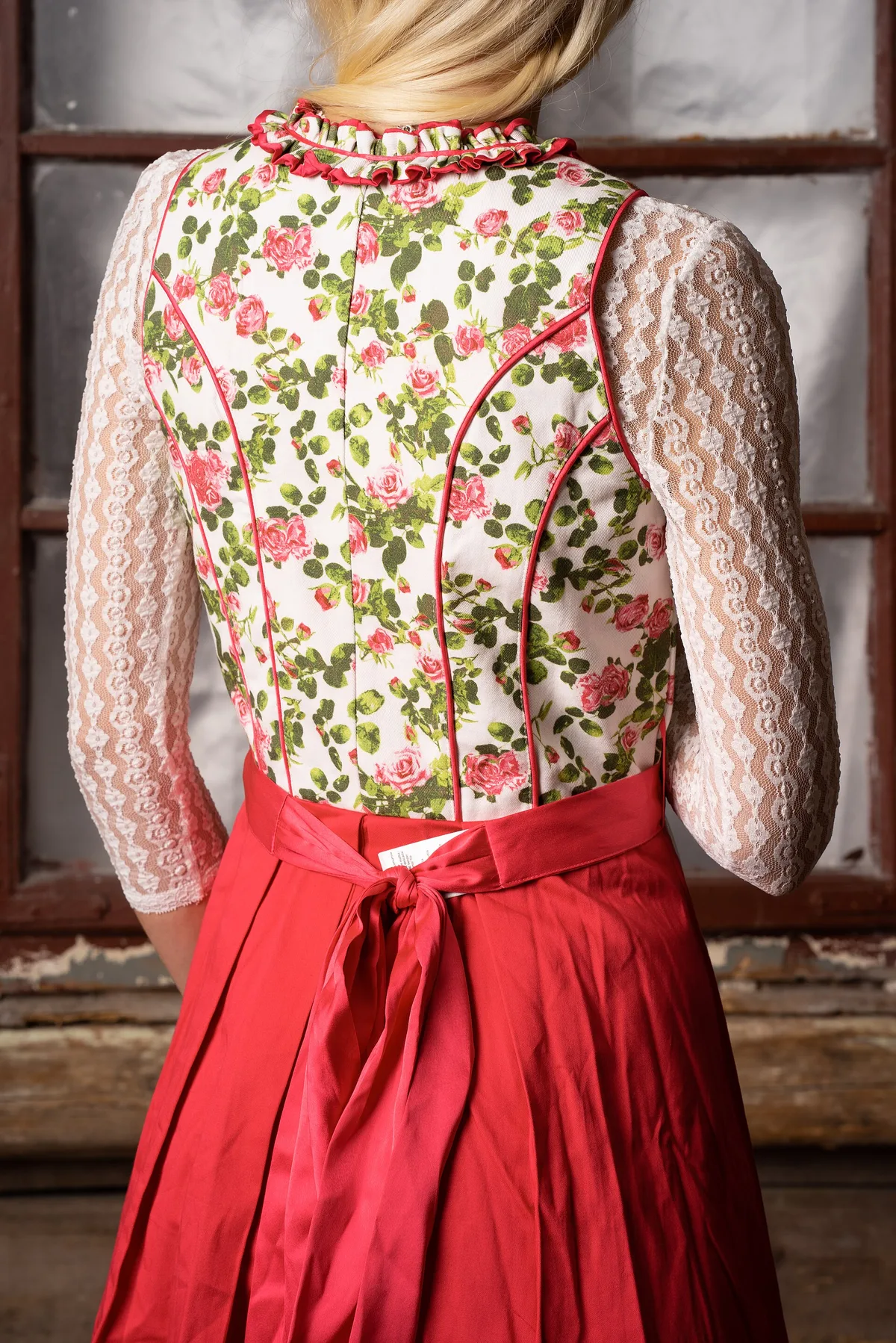
- Verdicts with reasons. Real criticism describes the clothes — the cut, the fabric, the construction — and supports its judgment from what was shown. Press-release lyricism repeated as praise is the tell of captured coverage.
- Correction. A publication that fixes its errors in public is one whose incentives have not eaten its standards.
The fact-checking end of the craft is where this shows most clearly. A long investigation into a house, a designer's biography or a garment's history serves no advertiser and earns no commission; it is paid for by the publication's belief that accuracy is the product. Our account of The Long Fact Check: How a Cover Story Stays True After Print describes that labor in detail. For related coverage, see The Long Fact Check: How a Cover Story Stays True After Print.
Practical steps: how to read any fashion publication's money
A short method, applicable to this magazine or any other:
- Find the funding disclosures. Most serious publications state their affiliate and sponsorship policies somewhere permanent. Read that page before trusting the reviews.
- Check the labeling on commerce. Follow one shopping link and see whether its commercial nature was declared where you clicked.
- Compare the praise. If every reviewed collection is praised in similar language, the reviews are not reviews. Look for the specific: a named fabric, a described construction, a stated reservation.
- Watch the verdicts. The single strongest signal of independence is a negative review of an advertiser, or a positive one of a non-advertiser, published without fanfare.
Our analysis, stated plainly: no funding model is clean. Advertising built fashion journalism and still sustains most of it; affiliate commerce funds coverage that advertising no longer pays for; sponsorship fills the gaps left by both. The reader's job is not to find a publication without conflicts. It is to find one where the conflicts are visible, the labels are honest and the criticism is supported by the clothes themselves.
What the evidence leaves unsettled
What this examination established is structural: fashion media is funded by parties with stakes in its coverage, and the defenses against capture are labeling, separation and verdicts with reasons. What remains unknown is the internal life of any given masthead — whether the wall between sales and editorial holds on a difficult week, which only the people inside can say. The reader's audit, done honestly, gets close to the answer. It cannot be certain of it. That limit is worth keeping in view, because a publication that admits it is more trustworthy than one that claims the wall is perfect.