Fashion week is the industry's selling season compressed into a few days. Designers show their next collections to the people who will decide whether those clothes get made, bought, and worn: retail buyers, editors, stylists, and now the cameras of everyone else. The shows are the visible part. The appointments, the order-writing, and the quiet edits happen around them.
The system is concentrated in a handful of cities. According to Wikipedia's overview of fashion, the world's three acknowledged fashion capitals are New York, Paris, and Milan, with London, Tokyo, and Los Angeles often named as second-tier centers — and fashion weeks are held in these cities, where designers exhibit their new collections to audiences. That geography explains the rhythm: the four main weeks run back to back, one city after another, twice a year.
This piece walks through what actually happens at a fashion week — who attends, what a show is for, how the schedule works, and who ultimately decides what sells. The short answer to the last question: not the runway. The runway starts a process that the showroom finishes.
What is a fashion show actually for?
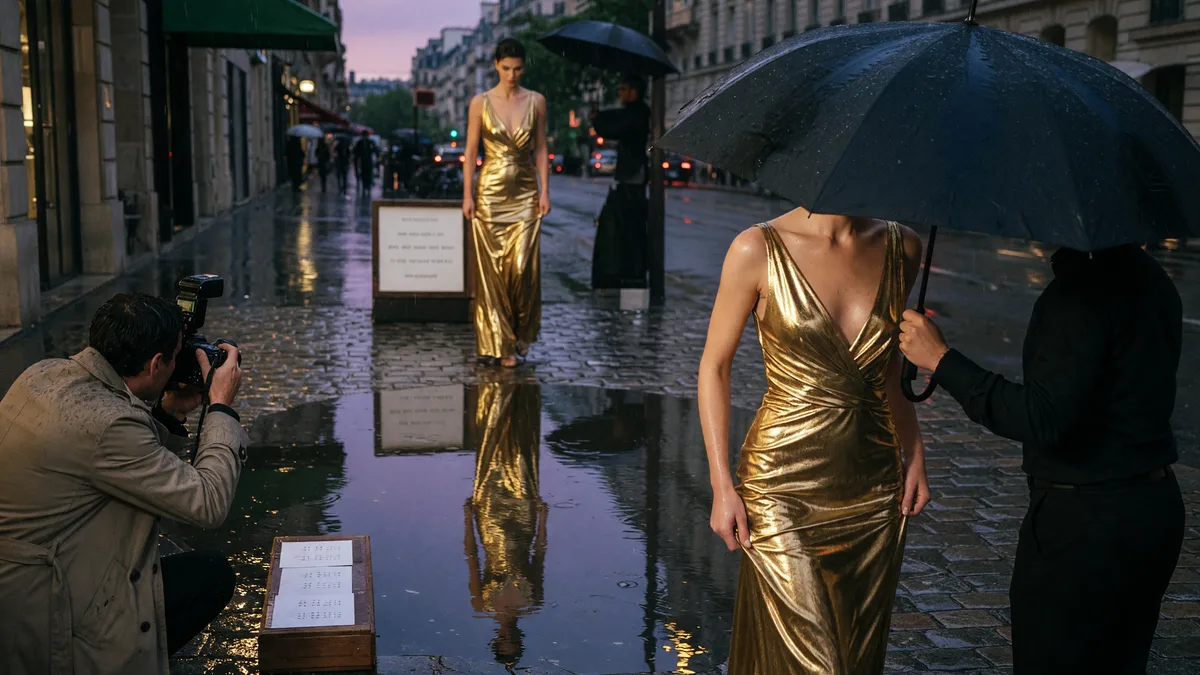
A runway show is a sales presentation staged as a spectacle. The clothes walking the catwalk have been produced in sample sizes, often by hand, in the months before. They exist to communicate a collection's ideas — its silhouette, its fabrics, its attitude — to an audience whose real work begins after the last model leaves. Buyers watch the show, then book appointments to see the collection up close, garment by garment, and place orders.
That is why a show is edited so tightly. A designer may show thirty or more looks, but each one carries a specific job: a coat that states the season's outerwear proposition, a dress that will photograph well, a look that signals price level. Nothing on the runway is accidental, and much of it will never be sold exactly as shown. The samples are the argument; the production line is the compromise.
The audience is layered. Front rows hold the buyers and editors whose opinions move orders. Behind them sit stylists, journalists, influencers, and the house's own guests. Every seat is a decision about who matters to the brand this season, which is why seating charts are studied as closely as the clothes. This connects to our earlier piece, Sarah Burton Appointed at Givenchy, the House Announces.
Who decides what actually gets sold?
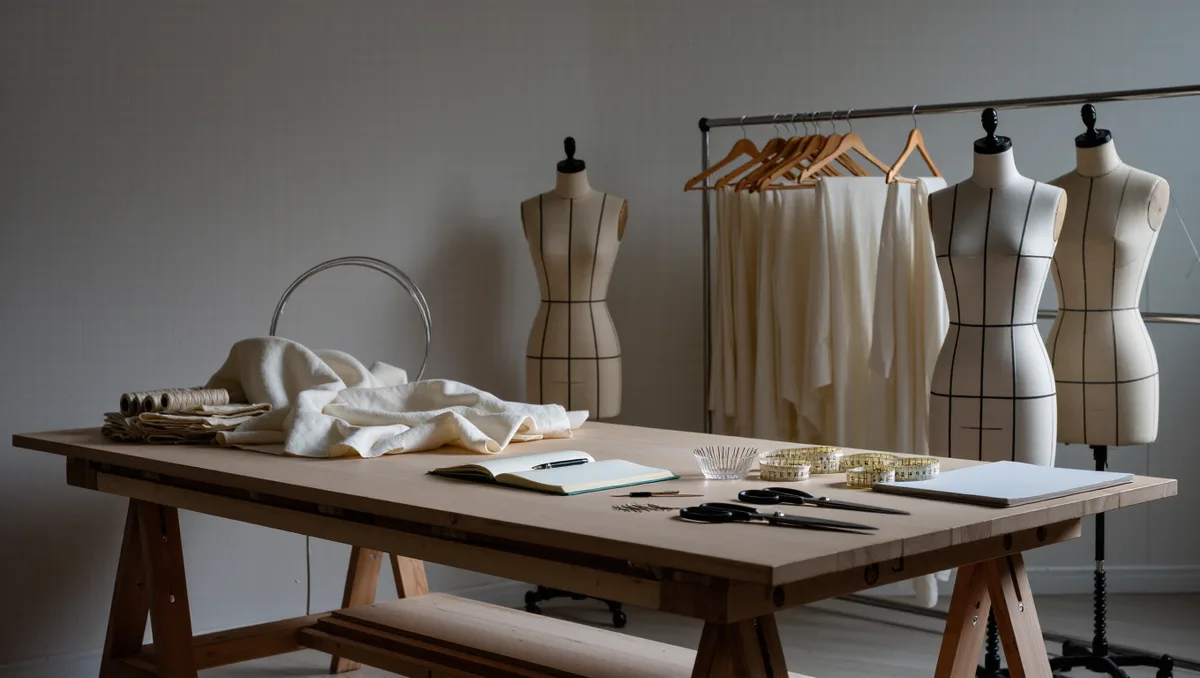
The buyer decides, in the most literal sense. Retail buyers from department stores and boutiques attend the shows, then visit the showroom — a quieter space where the full collection hangs on rails in sellable order. There they handle the fabric, check the lining, and choose which pieces, in which colors and sizes, their store will carry. Their orders, placed weeks or months before delivery, tell the house what to produce.
This is the part outsiders rarely see, and it is where the runway's fantasy meets arithmetic. A look that draws applause may be too expensive, too difficult to fit, or too extreme to sell in volume. A quiet blazer in the middle of the collection may quietly become the season's commercial backbone. Editors shape perception; buyers shape production.
Increasingly, the consumer has a same-day seat at the table. Shows are streamed, reviewed, and shopped in near real time, and some houses now sell pieces from the runway immediately. According to Wikipedia, fashion has also migrated online to a significant extent, which has softened the old geography — the cities remain central, but the audience is no longer only in the room.
How does the schedule work, and who sets it?
The main circuit runs twice a year and works ahead of the seasons. In broad terms, the autumn shows in New York, London, Milan, and Paris present the following year's autumn and winter collections; the spring shows present spring and summer. Each city gets roughly four to five days, and the calendar is coordinated so the cities follow one another without overlap.
Within each city, the schedule is assembled by the local organizing body together with the major houses, whose show dates carry weight — a headline designer's slot anchors the week, and smaller brands schedule around them. Time slots are a currency. A nine a.m. slot and a prime evening slot are different events, and a house's position on the calendar signals where it believes it stands.
The calendar also holds other kinds of presentation. Not every collection gets a runway show. Some designers stage presentations, where models stand or move slowly in a room and guests can approach the clothes. Others show lookbooks or private appointments only. A runway show is the most expensive and most public option, and choosing it is itself a statement about a brand's ambitions that season.
Why does fashion week matter to anyone who isn't there?
Because the decisions made in those rooms reach the high street within months. The colors, lengths, and shapes shown on the runway are filtered down through buyers' orders, magazine coverage, and eventually the mass market. When a silhouette appears in a chain store window the following year, the chain of decisions that put it there started at a show.
Fashion week is also the industry's news engine. Creative director appointments, debuts, and departures cluster around the calendar, and each one resets expectations for a house. Our coverage of these moves — from Matthieu Blazy's Chanel debut to Sarah Burton's appointment at Givenchy — is one thread of it; the shows themselves are the other. What this means for the reader is simple: the weeks are when the industry tells itself, in public, what it plans to be next. Readers following this should also see Matthieu Blazy's Chanel Debut: The Run-Up, Documented.
There is a second, less glamorous function. Fashion week is when the trade does its accounting in person — buyers meet designers, editors compare notes, and the informal consensus about who is rising and who is stalling forms over dinners and hallway conversations. That consensus, more than any single review, shapes the season's narrative.
What should a first-time viewer actually watch for?
Watch the clothes, not the spectacle. Three questions sort a collection quickly. First: is there a single idea, and does it hold across the looks? Second: would a real person wear these clothes — not a model, a person? Third: what is the house actually selling here, the fantasy or the wardrobe? The strongest collections answer all three.
Then watch what the audience does. Genuine note-taking in the front row means something. A buyer lingering in the showroom doorway means more. Applause is generous; orders are honest. The gap between the two is where most of the week's real story is written.
The runway is the beginning, not the verdict
A fashion week, stripped of its lighting and its guest lists, is a trade fair with better clothes. Designers propose, buyers dispose, and the press narrates. What the evidence of the system supports is this: the shows matter because they are the first step in a long commercial chain, not because they settle anything on the day. The verdict on any collection arrives months later, on a shop floor, in a size that fits — or it does not arrive at all. What remains unknown, every season, is which of the week's many arguments the market will actually hear.