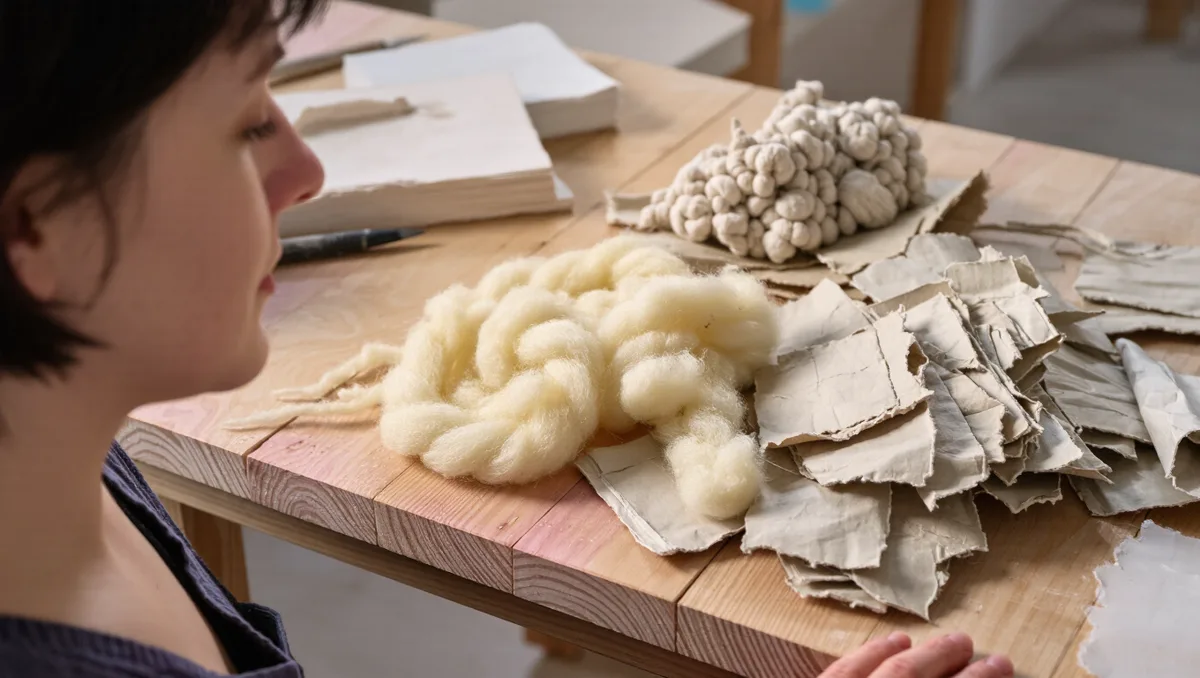
A found object is a natural or man-made thing, an item picked up by an artist and shown as art. The lineage runs from a 1912 Picasso collage to a 1917 porcelain urinal in New York. Its subject is not craft. It is choice.
This piece follows that idea through its documented record: a definition held in a museum glossary, a scandal traced in the files of a 1917 exhibition, and a term borrowed from the clothing trade. The argument is simple. When an artist designates a common thing as art, the decision, not the hand, does the work. This connects to our earlier piece, When Picasso Dressed a Dancer: The Ballets Russes and the Costume as Modern Art.
What Is a Found Object in Art?
The Tate glossary defines a found object as a natural or man-made object, or a fragment of one, found or bought by an artist and kept for the interest it carries. Such things may stand as works of art in themselves, or serve as sources. The sculptor Henry Moore, the same entry notes, gathered bones and flints that he treated as natural sculptures as well as material for his own work.
The wider record adds two refinements. A found object is often modified, and it usually arrives with a non-art function already attached. The French term objet trouve, a calque still used in studios and seminar rooms, names the same fact from the other side: the artist is understood to find the work, not to build it.
What Did Duchamp Do With a Urinal in 1917?
In April 1917, a porcelain urinal signed R. Mutt was submitted to the inaugural exhibition of the Society of Independent Artists at the Grand Central Palace in New York. Society rules promised to accept every work from an artist who paid the fee, so the piece was not rejected. It was never placed in the show area.
The record continues with unusual precision. Fountain was photographed at the gallery of Alfred Stieglitz, and the image ran in The Blind Man, a Dada journal. The original is lost. Sixteen replicas were made under the artist's approval in the 1950s and 1960s, which is why the work can still be walked up to today. Duchamp stated they are "everyday objects raised to the dignity of a work of art by the artist's act of choice." Readers following this should also see The Real Story Behind Artificial Intelligence in Art: How the Images Are Made and What They Ask of Artists.
Why Does Choice Carry More Weight Than Craft?
Duchamp called these designated things readymades, a word he took from the clothing trade, from prêt-à-porter, ready-to-wear. He made them while living in New York, and the documented works date from 1913 to 1921. A standard urinal bought at a hardware store, tipped onto its back and set on a pedestal, became the model: unaltered matter, a title, a signature.
The choice, then, is the entire technique. It asks where the artwork lives, in the object or in the decision, and it answers in favor of the decision. That answer still divides opinion, which is a sign of an argument that has never needed to end.
Who Else Shaped the Lineage?
The documented record names several hands, each taking the idea in a different direction.
- Pablo Picasso pasted a printed image of chair caning onto his 1912 work Still Life with Chair Caning, the first public use of the idea in the historical account.
- Kurt Schwitters built collages whose found papers carry anonymous wear and tear, so the object's social history stays visible.
- Haim Steinbach arranged merchandise on shelves, treating the thing's life as a consumer icon as the very material of the sculpture.
Three practices, one shared premise. The world already supplies the object; the artist supplies the frame.
Conclusion: The Object Looks Back
Found object art holds because it relocates the site of art. The skill on display is selection, and the evidence, from a museum glossary to the file of a 1917 jury, shows a working method rather than a single stunt. A urinal signed with an invented name, a chair caning clipped from a print, bones kept in a drawer. Each one says the same thing in a quiet voice: art begins where attention does.