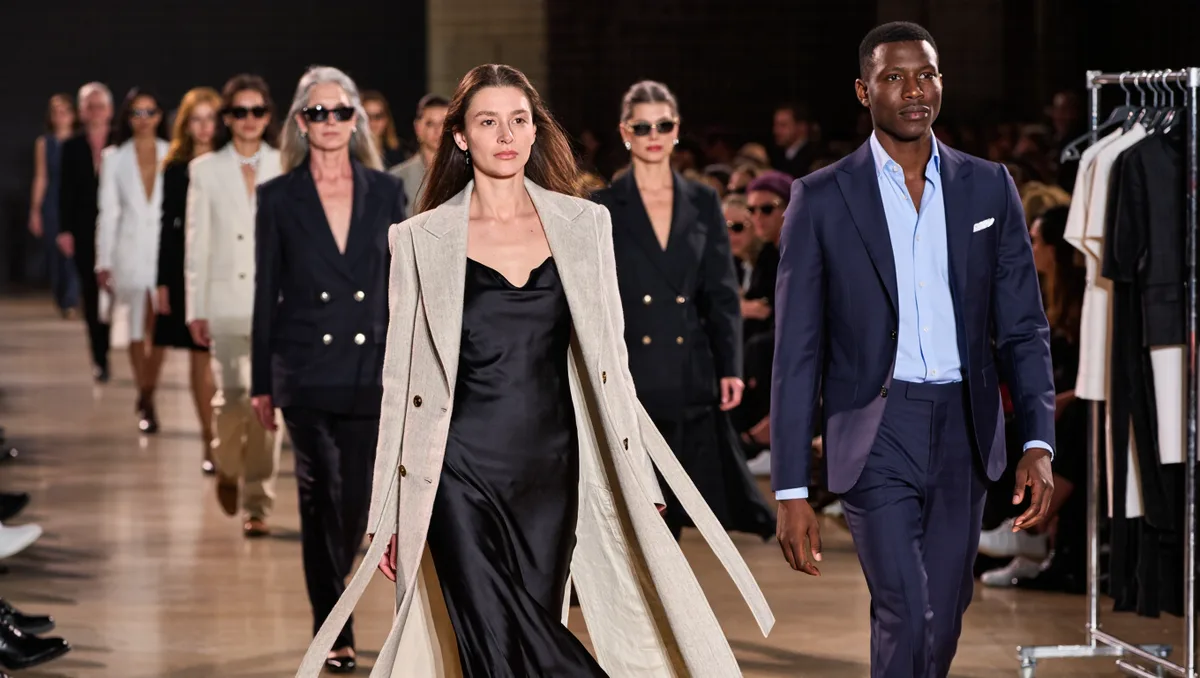
Alexander McQueen's runways were arguments, staged twice a year for a decade, that a fashion show could be a work of authored theatre rather than a wholesale appointment — and the two museum retrospectives that followed his death, Alexander McQueen: Savage Beauty at the Metropolitan Museum of Art in 2011 and at the Victoria and Albert Museum in 2015, are the record of how decisively he won. The Met's exhibition became the Costume Institute's most visited show to that point; the V&A version became, per the museum, the most visited exhibition in its history. Institutions of that rank do not canonise marketing stunts. They canonise authorship, and McQueen's shows — from the 1998 Joan to the 2001 Voss — are now read as the primary work.
Who was Alexander McQueen?
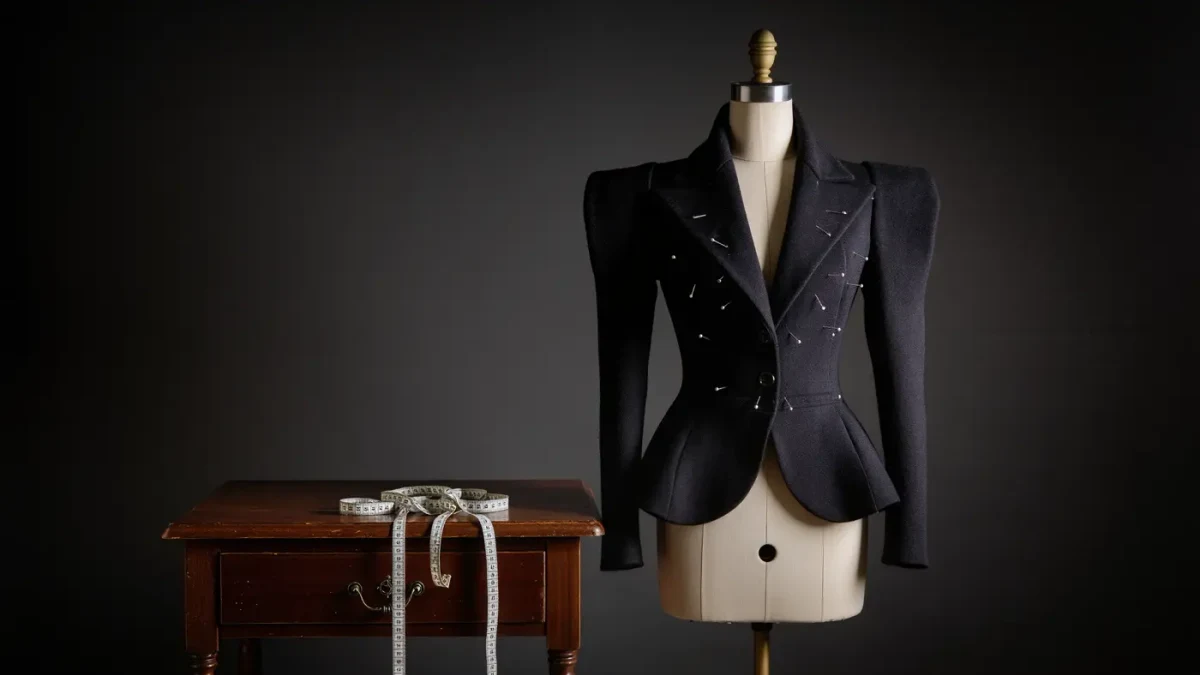
A tailor's son from Lewisham who learned Savile Row cutting as an apprentice and never abandoned its discipline. Born in London in 1970, McQueen left school at sixteen, apprenticed on Savile Row with the tailors Anderson & Sheppard and later Gieves & Hawkes, worked in theatrical costumiers Berman's and Nathan's — the source of his fluency in period gesture — and studied at Central Saint Martins, whose 1992 MA graduate collection, per the school's records, was bought in its entirety by the stylist Isabella Blow. He was appointed designer at Givenchy in 1996, holding the Paris couture post until 2001 while running his own house, whose stake Gucci Group acquired in December 2000. He died by suicide on 11 February 2010, days after his mother's death, weeks before his autumn collection was shown posthumously in Paris.
What made the shows so important?
They were composed, not staged. McQueen's early London shows in the 1990s — the 1995 Highland Rape collection, which addressed the clearance of the Scottish Highlands and was widely misread as misogynist, a misreading he contested in interviews — established the format: narrative collections, scenographic menace, models as characters rather than mannequins. The 1998 show no. 13 closed with the actress-dancer Aimee Mullins, a double amputee, walking on carved wooden prosthetics; the 1999 spring finale had robots spray-painting a white dress worn by the model Shalom Harlow on a rotating turntable; the 2001 Voss enclosure ended with its glass box shattering to release moths around the writer Michelle Olley. Each was a designed event with an author's hand visible in every credit — and, importantly, they were also commercial collections: the tailoring under the theatre was Savile Row training applied at couture level, which is why the houses bought him and the buyers, eventually, forgave him the stunts. The criticism that survives is worth keeping: some seasons, notably mid-2000s, critics found the narrative apparatus heavier than the clothes, and McQueen's own recorded impatience with the press suggests a man tired of explaining the difference between shock and argument.
Runway as authorship
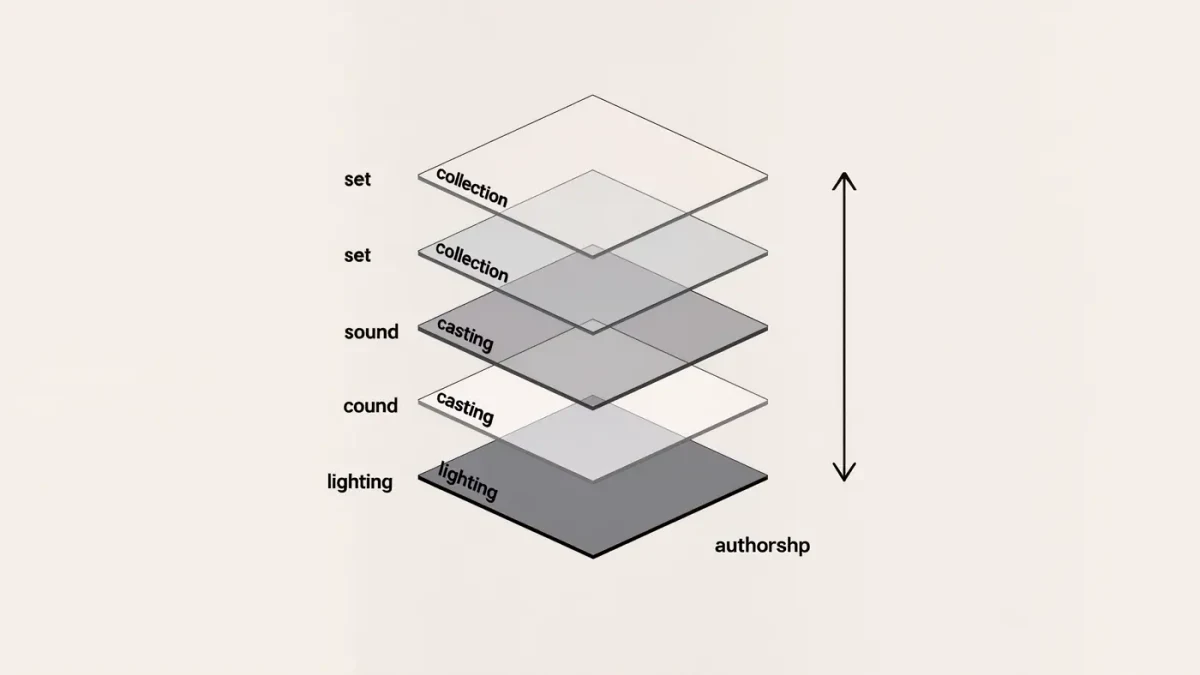
The deeper claim is about where design happens. Before McQueen, the show documented the clothes; after him, the show is frequently cited as the work, with garments as its props and its proof. He conceived of the collection, the set, the sound and the casting as one composition — the curator Andrew Bolton, who organised Savage Beauty, framed him in the Met's catalogue precisely as a designer whose medium was the whole event. This is the position the museums ratified: the 2011 exhibition presented rooms as shows (the Romantic Gothic chamber, the Romantic Primitivism cabinet of totems), using runway films, sound and staging so that visitors experienced sequences rather than objects. McQueen did not invent the spectacle runway, but he is the documented case that a show can carry a designer's authorship as a novel carries a writer's — and the industry's post-2010 scenography boom, from major houses staging full environments each season, is the market pricing his precedent.
What did Savage Beauty actually settle?
The question of legitimacy. When McQueen died, obituaries debated whether the theatrical designer would survive museum scrutiny; the Met's 2011 attendance figure — around 661,000 visitors, the Costume Institute's record at the time, extended for an extra week per the museum's announcements — answered empirically, and the V&A's 2015 staging, with roughly 493,000 visitors in London per the museum's closing statements, confirmed it was not a New York anomaly. The argument the exhibitions settled is that McQueen's runways constitute an oeuvre: designed, dated, documented, and readable as a sustained body of work. That standard now governs how the industry evaluates its own shows, and McQueen's posthumous collections, shown in Paris in March 2010 under his studio's direction, close the record the way his shows always did — with the clothes holding the argument up.
How did the houses treat the theatre?
The corporate record shows the theatre was priced, not tolerated. Gucci Group's 2000 acquisition of the McQueen house rested, per the companies' statements, on the designer's total vision — shows, image and tailoring as one asset — and the Givenchy appointment of 1996 had already put a narrative designer in charge of a French couture maison, with the mixed critical results he openly acknowledged. Production budgets for his Paris shows grew into six figures and beyond, and the collections themselves, especially the tailoring, provided the commercial engine that the spectacle advertised. This division of labour is the useful lesson: the theatre sold the story, the clothes sold the season, and the museums that later exhibited him arranged their galleries accordingly — gowns and tailoring in the vitrines, the shows' films on the walls, neither claiming to be the whole work alone.
The archive infrastructure matters as much as the attendance figures. McQueen's shows were filmed, catalogued and preserved by his house from the early seasons, giving curators a dated, complete record of each collection's staging — the precondition for both exhibitions, which quoted the runway films at full length in gallery. After his death the house continued under his studio's leadership, per its announcements, maintaining the collection schedule and the archive as a living estate. Savage Beauty's achievement, on this reading, was procedural as much as interpretive: it established the format — rooms as shows, films as primary sources — by which any designer's runway history can now be exhibited, and it did so with the most extreme case available.