Twenty years ago a casting director's name appeared nowhere a civilian could read; today the credits of a runway show are parsed online within minutes of the finale, and the people who assembled its cast — Ashley Brokaw, whose long collaboration with Prada is among the closest designer-caster partnerships in the industry, or Piergiorgio Del Moro, whose Milan-based office supplies faces to houses across the international calendar — are discussed with something approaching auteurship. The change is real and structural: casting has moved from logistics to authorship, and the industry now treats who walks and who fronts a campaign as a creative decision with a named author.
What does a casting director actually decide?
More than a shortlist. The casting director reads a collection or a campaign brief and translates it into a theory of faces: the age distribution of the cast, the balance of established names against unknowns, the mix of markets a global audience reads in a lineup, the specific faces whose combination produces the season's mood. On the show side this extends to order of appearance, since the opening and closing looks are marketing positions, and to the fittings and walk rehearsals where a lineup becomes an ensemble. In campaigns it extends to negotiation and to the chemistry between faces, photographer and brand. None of this is secretarial; it is the composition of an image the brand will live with for years.
When did casting become credited authorship?
The shift was gradual and then abrupt. Through the 1990s and 2000s, casting was handled with discretion — the profession existed, with offices in Paris, Milan, London and New York, but credit lines were rare and the trade press mentioned casting only in industry features. The 2010s brought the change: show credits began listing casting directors formally, casting offices cultivated public Instagram identities documenting their seasons, and the social-media era made a cast instantly legible and instantly discussable. By the 2020s, readers were naming casting directors in reviews, and the profession had its own public stars, of whom Brokaw and Del Moro are the most frequently cited examples on two continents of practice.
Why faces became strategy
The economic background is the shift in where fashion's value lives. A runway show is no longer primarily a wholesale order-writing event; it is a content-producing moment, and its cast is distributed worldwide within minutes. A face that photographs as a character rather than a mannequin gives the collection a narrative the audience can retain, which is why casting offices now keep rosters with the care agencies once reserved for celebrities. Campaign budgets, meanwhile, moved toward faces with their own audiences, and the negotiation of who brings what to an image became a specialisation in its own right.
Did casting reshape diversity on the runways?
Materially, yes, and the credit belongs substantially to the casting profession. The industry's documented moves toward racial diversity on runways and in campaigns — uneven, contested and still incomplete — were executed by casting directors, who control the actual composition of a show regardless of what a brand statement claims. Public scorecards of runway diversity that emerged in the 2010s and 2020s effectively audited casting decisions, and offices responded by broadening their scouting and their rosters. The uncomfortable corollary is also true: where a season regresses, the casting credits make the author of the regression as visible as the author of progress.
Is casting direction an art or a service?
The evidence now supports the first term. A great cast is a composition — repeated viewings reveal pacing, contrast and casting-room decisions that operate with the logic of an edited film — and the industry's own behaviour confirms it: designers keep decades-long exclusive relationships with individual casting directors, awards and profiles now recognise the field, and a change of casting office is reported as a strategic shift of a house, comparable to a change of photographer. The casting director's authority is the quietest form of creative direction in fashion, precisely because its product is people: an image the audience cannot name the author of, and never forgets.
How does a casting actually get made?
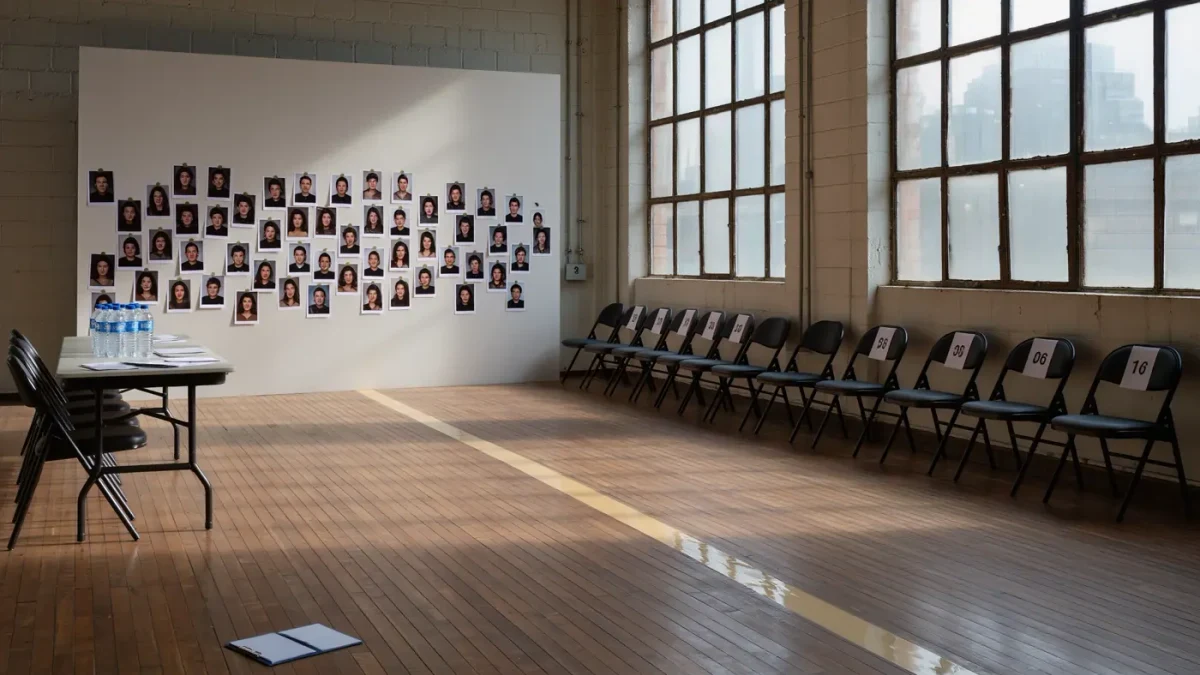
The documented workflow is a season-long machine. Casting offices request candidate cards from the model agencies months before a show, then run go-sees and callbacks where designers — or in campaigns, photographers and clients — approve faces in person; measurements are taken, options are held, conflicts between houses are negotiated, and the final cast survives a gauntlet of fittings and hair-and-makeup tests in the final week. The visible result, sixty or so people walking in order, is the compressed output of thousands of decisions, most of them unrecorded. This is why the profession's authority grew from the inside out: designers experienced the difference between a competent cast and an authored one long before the public learned to look for it.
What happens when a cast becomes the story?
Occasionally the cast is the collection's headline, and the profession handles that too. A season's faces are discussed across social media within minutes of the finale, individual walkers acquire followings that outlast the show, and casting offices maintain the public documentation — cards, tests, season recaps — that feeds this attention. The strategic risk is symmetric: a memorable cast can carry a weak collection, and a badly composed one can flatten a strong one, which is why houses treat their casting relationships as long-term creative partnerships rather than seasonal procurement. In fashion's current division of labour, the designer proposes the clothes; the casting director proposes who the clothes happen to. Increasingly, the second proposal is the one audiences remember.